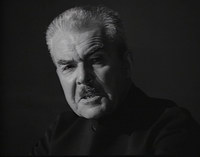
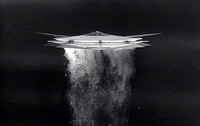
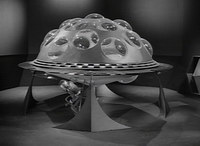
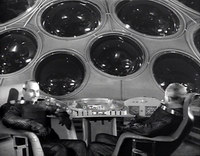
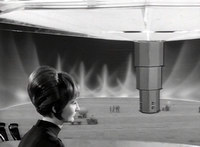
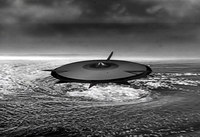
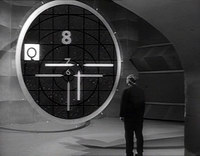
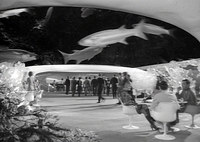
Archiv Blu-Ray Reviews

Blu-Ray Review: Raumpatrouille Orion

This is another very late review, but one I never thought I would be able to write: the classic German science-fiction series Raumpatrouille Orion was finally restored in glorious high-definition! So it was time to dust off my original review of the disappointing DVD release for this new Blu-Ray set. This time, I only wrote it in English even though there are still no English soundtracks or even subtitles available, but hopefully this will still make the series better known outside of Germany.

The original Blu-Ray in the mediabook packaging I bought for too much money back at the end of 2023 is now again out of print, but a replacement edition in a standard keepcase with the same discs is still available.

Continue to Review »

Kommentar schreiben

Blu-Ray Review: Raumpatrouille Orion

Raumpatrouille Orion
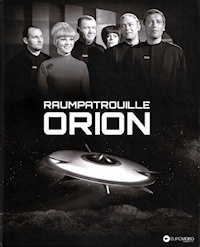
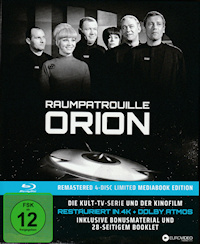
Cover

Title Raumpatrouille – Die phantastischen Abenteuer des Raumschiffes Orion
Studio Bavaria Film (1966)
Released by Eurovideo (2023)
Disc Type 4xBD-50 (36,0 / 36,6 / 39,8 / 35,9 GB) Bitrate ø 30 max. 40
Runtime 59:01 / 56:06 / 60:51 / 56:56 / 58:19 / 60:55 / 59:02 / 89:33 Minutes Chapter 6/Episode
Region B (Germany) Case Mediabook
Format HD 1080i25 AVC
Image 1.33:1 16:9 yes
Sound Dolby Digital Atmos True HD 7.1 Surround German Dolby Digital HD Master 2.0 Mono German
Subtitles German
Rating FSK 12
Extras • Interviews mit Cast & Crew
• Musikclips
• Hinter den Kulissen
• Kinopremieren-Eindrücke
• Kinotrailer Deutsch & Englisch

The Series

What today sounds like a fairytale may become reality tomorrow. Here is a fairytale from the future: there are no more nations, there is only humankind and its colonies in outer space. Far away planets are being settled and the seabed is developed as living space. With speeds unimaginable today, spaceships rush through the Milky Way. One of these ships is the Orion, a tiny part of a gigantic security system protecting Earth from the dangers of outer space. Come along with the Orion and its crew doing patrol duty on the edge of infinity!


Before World War II, the fantastic and utopian film genre had been well developed in Germany and even showed some signs of what would later become science-fiction. Directors like Friederich Wilhelm Murnau or Fritz Lang had reached the limits of the medium with movies like Metropolis, Die Frau im Mond, Nosferatu or Das Kabinett des Dr. Caligari and showed a creativity which was far ahead of its time. But since 1933 the German film industry had neglected the genre – the only real science fiction productions Weltraumschiff 18 antwortet nicht and Zwischenfall im Weltall were cancelled at the beginning of the war in 1939 and the already shot material was only later assembled as a short film called Weltraumschiff I.

Meanwhile in the USA, science fiction was nothing unusual, but still on the level of dime novels in the beginning. Just before the second world war, Flash Gordon and Buck Rogers were the precursors of the genre, who were brought to cinemas by Universal Pictures as serial movies with the same actor, Buster Crabbe, in the title roles. At the end of the 1940s science fiction boomed in America with space heroes, spaceship captains and cadets taking over not only the cinemas but also the television screens. Although simple entertainment still prevailed, there were already some sporadic beginnings of serious science fiction like the cinematic space opera Forbidden Planet in 1956.

Not much of this was heard of in Germany and even Europe, because the American productions made it to the other continent only years, and sometimes decades, later. Science-fiction in Germany was widespread in literature but apart from some exceptions like the harmless comedy Der Herr vom anderen Stern with Heinz Rühmann or the ambitious Polish and East German co-production Der Schweigende Stern, the genre was largely ignored. While the science-fiction and UFO surge gained momentum worldwide, in German cinema and television were more fixated on crime stories by Edgar Wallace or Francis Durbridge – only Perry Rhodan managed to be successful in the area of trivial literature.

But there was somebody who had not let himself be influenced by this trend: since 1962, author and script writer Rolf Honold had tried to pitch the idea of a science fiction series to television producers, but at first he was ignored. There were no private stations in Germany in the 1960s yet and the state-run television did not like costly experiments. Eventually Günther Rohrbach, then head of WDRs drama department, got interested in Honolds bold and revolutionary idea.

Space Patrol

Looking back at Rolf Honolds concept of a science fiction series, it becomes apparent why the German television executives shied away from it. The author had of course looked around in the home country of the genre and found some examples, among them the mother of all science-fiction-movies, MGM’s Forbidden Planet. Perhaps he had even heard of the simple American children’s series Space Patrol or the puppet production with the same title from England – these had not much in common with his own idea, but possibly inspired him when he was looking for a suitable title.

Raumpatrouille – Die phantastischen Abenteuer des Raumschiffs Orion (Space Patrol – The Fantastic Adventures of the Spaceship Orion) was the official title later, but Rolf Honold might have preferred the more concise short version Raumpatrouille Orion (Space Patrol Orion). The name spoke for itself, because the concept consisted of the adventures of a spaceship captain and his crew – and much more than that. The author had created a complex futuristic world, which had its roots in the science-fiction of the 1950s, but was otherwise fully original and independent. There might have been no way around the typical spacefleet command structure, the shape of the spaceship or other details, but Rolf Honold had created something completely unique out of these elements.

The Orion is prepared for liftoff

Because a regional television station like the WDR was not able to provide the planned production costs of nearly 3.5 million marks alone, an alliance was forged with the other regional broadcasters NDR, SDR and SWF, each taking over 20 per cent of the costs. The final fifth share came from the french state television ORTF, who in return was allowed to produce a parallel version with some french supporting actors. The company commissioned to produce the series was Bavaria Film with their world-renowned studios in Geiselgasteig, in which, amongst others, the WDR had a stake. Since the 1960s many television movies and series had been produced there, so Bavaria was the best choice for an elaborate production like Raumpatrouille Orion.

While in the US a season of a television series usually consisted of 24 or often more episodes, Raumpatrouille adhered more to the British conventions of a mini series: only seven hour-long episodes were planned right from the beginning. The scripts were written by Rolf Honold in collaboration with a team of authors under the moniker of W.G. Larsen, consisting of directors Michael Braun and Theo Mezger and Producers Hans Gottschalk, Helmut Krapp and Oliver Storz. Together with this experienced team of television producers the author was able to develop his concepts into full-blown stories.

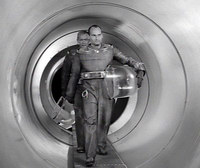
The seven episodes were enclosed by a background story referring to the title of the series: Raumpatrouille – Space Patrol – is not an honour, but a penalty for the main protagonist, the insubordinate spaceship commander Cliff McLane. He and his crew are notoriously famous in the space fleet for their escapades, which are often heroic deeds at the same time. But they have crossed the line too often and are now sentenced to simple patrol duty instead of more exciting missions – much to the chagrin of McLane, who nearly quits and is only held back by his commander.

But the adventures of the Orion are not just boring patrol duty, because in the first episode the heroes already encounter aliens, who in Rolf Honolds universe are not as common as, for example, in Star Trek. The extra-terrestrials are dangerous invaders, who are so alien that they can’t be communicated with and can only be fought against with extreme force. This quite simple black-and-white image of hostile alien life may be unreasonable and not one of the most original idea of the series, but it was a very typical element of classic science fiction, which had not only been used in the first episode, but also in the finale and a third story.

Rolf Honolds vision of the future is, however, distinctly limited to the military environment of the Orion’s crew, so that the viewer does not get to see much of civilian life. The government structure is very vague and leaves the impression that earth is controlled only by the military. The space fleet seems to be organised by maritime principles, but the existence of a galactic security service called GSD, which is not exactly popular with the spaceship crews, gives the futuristic society something totalitarian. Nevertheless most of the stories do not take themselves too seriously and humour is a very distinctive part of the series, which has a definitive light-hearted atmosphere.

The Space Cowboy

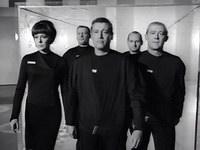
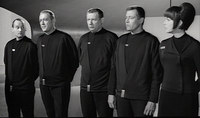
While other fictional spaceships were only able to be commanded with a crew size in the double or triple digits, a handful of people were enough for the Orion. This seems mainly to be an economic decision of the producers and authors to keep the cast relatively small and to avoid costly mass scenes. To expand the small group of main characters, another figure was added, functioning as a watchdog of the heroes. It was one of the first truly multinational spaceship crews, although mostly by name only, because the actors all hailed from Germany or Austria.

For the role of the charismatic spaceship commander an actor with the appropriate star qualities had to be found. The selection to choose from was quite large, because Germany’s theater, film and television in the 1960s had a lot of young actors and long-time professionals to offer, although not many wanted to get involved in the risky project of a science-fiction series. But one actor had not let himself be influenced by the common aversion to the genre and thought that the role of a spaceship captain would be a unique career opportunity.

The Austrian Dietmar Schönherr had started his career involuntarily in a disreputable way, starring in a German propaganda movie during World War II when he was only eighteen years old. After the war he became an author, host and reporter with the Austrian radio broadcast service ORF and later went to Cologne, working as a narrator and dramaturge for the West German radio station WDR. In the mid-1950s Schönherr made his breakthrough as an actor, after which he appeared in numerous roles on the big screen and sometimes on television – mostly in sophisticated dramas, but also simple comedies, the occasional crime story and with The Longest Day even in a large American production. His characters were often of a doubtful nature, but he also had what it took for sympathetic and rebellious hero figures and was therefore the best choice for a classic spaceship commander.

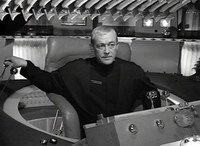
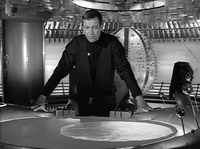
Dietmar Schönherr’s Cliff McLane is insubordinate, rebellious, a daredevil and sometimes a bit impertinent, while being entirely likeable. His great sense for justice often surprises his superiors, resulting in many clashes with them and occasionally he even threatens with quitting. Mostly he grudgingly accepts the chain of command, but sometimes ignores it, which gets him into hot water with the authorities. McLane has a distinct sense of humour, but it is often overshadowed by the cynicism of someone who has experienced a lot. Dietmar Schönherr brilliantly manages to show the different sides of his character and actually makes the impression of a competent spaceship commander, who seems entirely human especially because he isn’t perfect.

The Best Crew of them All

McLanes Crew were not only his subordinates, but also his best friends. The characters were deliberately made international, but apart from the names this was not really noticeable because all parts were of course portrayed by German and Austrian actors. Although the monologue in the title sequence mentions that there are no more states in the future, Rolf Honold did include some hints about the origins of the characters.

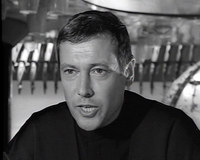
By far oldest crew member, Hasso Sigbjoernsen is able to fix up the Orion even in the worst situations. The resourceful engineer, who is lovingly referred to by McLane as “the old buffalo”, was played by Claus Holm, who was only in his late 40s when the series was shot, but proved to be ideal for the part. Holm had originally started his career as a boxer, but then became a successful actor in the 1940s. After his beginnings in the DDR he fled to the west and was cast in many small and big film productions. Raumpatrouille Orion was one of his last great roles and he is remembered by many as the down-to-earth engineer at the side of Dietmar Schönherrs Cliff McLane.

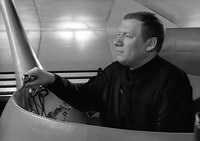
Mario DeMonti, weapons officer and computer expert, is responsible for two of the most important positions, but is also the jokster of the crew and something of a ladies’ man. He was played by Wolfgang Völz, who was very busy as a supporting actor in many television series and also in some international film productions. With Raumpatrouille Orion he made his breakthrough as a comedian for the first time. Although his character was primarily conceived as a humorous diversion, he performed Mario DeMonti not only as a clown, but also as an officer who is not to be trifled with in serious situations. For Wolfgang Völz Raumpatrouille Orion was only a brief part of a long career, in which he played numerous film and television-roles and also became a much sought-after dubbing actor, providing the German voices of Walter Matthau, Peter Ustinov, Mel Brooks and many others.

Atan Shubashi is responsible for the navigation of the Orion and is referred to as an Astrogator. He is quiet, cautious and also more nervous than his crewmates but he is doing his job with heart and soul and would even let himself tear to pieces for his commander. He was portrayed by Friederich G. Beckhaus, who had an illustrious past career both in movies and television, where he mostly played serious roles and established himself as a character actor. His appearance in Raumpatrouille Orion was therefore more dramatic than humorous, because Atan was designed as a counterpart to the somewhat wilder Mario. After Raumpatrouille, Beckhaus had a long career and even returned to the science-fiction genre, providing the German voice of the Cardassian Garak in Star Trek – Deep Space Nine.

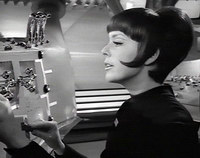
Helga Legrelle, the only female member of the regular Orion crew, is responsible for the communications, called Raumüberwachung, but is much more than a simple switchboard operator. Rolf Honold had designed her character far from common stereotypes, so that the little-known actress Ursula Lillig was a full part of the cast as a competent crew member and not only as a dark-haired beauty, who has much more to do than just receive radio transmissions. There were hints that Helga Legrelle was romantically involved with her Captain, but apart from a secret crush on her superior the authors did not go further into this aspect of the character.

Spies, Chiefs and Military Brass

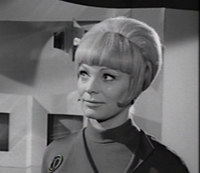
Tamara Jagellovsk of the galactic security service has been assigned as a watchdog to the crew of the Orion, who at first consider her as an enemy in their own ranks. The pretty security officer is at first very icy and doesn’t stop short of countermanding McLanes decisiony by Alpha Orders, but is eventually able to win the trust of the Orion crew. Tamara was portrayed by Eva Pflug, who was already very visible in German movies and television, but only became really famous with Raumpatrouille Orion. Together with Ursula Lillig and Charlotte Kerr she was celebrated as an icon of women’s emancipation in the series.

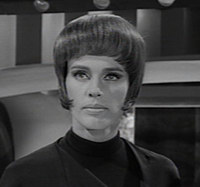
General Lydia van Dyke was McLanes superior until his penalty transfer and is about the only one who is really able to give him orders. The tough, but fair officer also commands a spaceship and together with Helga Legrelle and Tamara Jagellovsk forms a trio of strong female characters, who were very unusual for 1960s German television. The dutiful general was portrayed by theatre actress Charlotte kerr, who was not very active except on the stage and played her role in Raumpatrouille Orion surprisingly serious and with much more pathos than her co-stars, but was also able to bring more realism into her character.

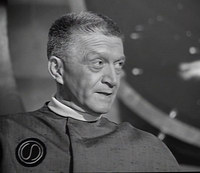
Other secondary characters of the military leadership were equally appropriate cast as the main figures. Benno Sterzenbach, a very busy actor in the 1960s, portrayed the gruff, but good-natured General Wamsler, who was often accompanied by his arrogant adjutant Spring-Brauner, played with much relish by Thomas Reiner. The unmistakeable Friedrich Joloff was the calm, but subliminally dangerous Oberst Villa, who is at first less present in the series, but later plays an important role in the finale.

Through the Galaxy with an Electric Iron

Raumpatrouille Orion was shot on black-and-white 35mm film mainly for budget reasons, but also because colour television had not yet been available in Germany when the series would be broadcast in 1966. Some selected scenes were, however, shot in colour, because the blue screen technique required it, but the final version was always printed in black-and-white. The series was shot in nineteen weeks between March and July 1965, with nearly all scenes being filmed in the Bavaria Studios in Geiselgasteig near Munich. Only a few sequences were filmed on location, among them some spectacular-looking landscapes of alien planets. Those were originally planned to be shot in Iceland, but budget restrictions made it necessary to relocate to a coal mining pit near Munich, which looked equally good, but turned out to be disappointing and much more uncomfortable for the actors. The only other location was the Bavarian castle Höhenried, which doubled for the residence of an extraterrestrial ruler.

Nearly all other scenes were shot in the Bavaria studios, where production designer and architect Rolf Zehetbauer had constructed the complex sets. The main set of the Orion command bridge was 28 meters wide and and was constructed with the help of the thermoform-technology out of acrylic glass, which back then was a completely new innovation. The interiors and parts of the outsides of the mini-shuttles called Lancets were also constructed in life-sized proportions. The sets of Raumpatrouille Orion became not only famous because of their futuristic shapes, but also for their many detailed fixtures, which mostly consisted of everyday items. The most famous one was the grip of an electric iron in the engine room, but there were many other occurrences of plastic cups on the ceiling, pencil sharpeners as control buttons and other common household appliances.

Into Space with Alka Seltzer

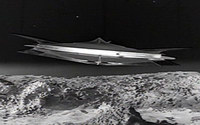
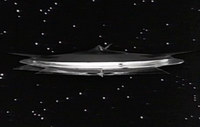
While the actual shooting of the seven hour-long episodes was completed in less than six months, the production of the elaborate special effects lasted more than a year. Led by Bavaria’s special effects expert Theodor Nischwitz, 26 people worked on the complex scenes, which depicted the amazing underwater launches of the Orion and her travels in space and also some exciting action sequences, blown up planets and many other futuristic scenarios.

For a German television series from the mid-1960s, the effects were surprisingly complex and nearly reached Hollywood standards, but also used a mix of high tech and low tech methods. The famous underwater launch sequence of the orion was accomplished by combining a model shot of the ship with the bubbles of an alka-seltzer-tablet. For the explosion of a planetoid, a ball of rice, coffee and other ingredients were blown to bits by a stream of compressed air in slow-motion. Other effects required the extensive use of an optical printer, which even allowed the combination of special-effects and real shots. Many sets were enlarged with bluescreen methods, letting oversized fish appear in the transparent ceilings of the undewater habitats and making other strange things possible.

The costumes were designed by the Hungarian fashion designer Marget Bardy, who, like her German colleague Vera Otto, only occasionally worked for movies and television, but more for the European theatre. For Raumpatrouille Orion the two designers created the famous uniforms, which were admired by everybody – except by the actors, who suffered a lot in the extremely tight costumes, which were designed for the look, but not for comfort.

Space Jazz

Instead of a traditional orchestral score, the producers opted for a modern approach – not too modern like the electronic beeping noises of Forbidden Planet, but more in a jazzy direction. They hired Peter Thomas, who had become one of the most successful film and television composer in Germany since the beginning of the 1960s and had already composed many soundtracks for the Edgar Wallace series, the Jerry Cotton movies and the television ‘Strassenfeger’ Die Schlüssel and Melissa, showing an immense versatility. Peter Thomas had the reputation of using small and inexpensive instrumentations to produce a very distinct sound, which was described as futuristic even before he had worked on Raumpatrouille Orion.

For Raumpatrouille Orion, Peter Thomas had created a very special musical style, which was later called the New Astronautic Sound, but did not actually use many futuristic resources. The Peter Thomas Sound Orchestra was basically a jazz band with a large brass section, which often took the lead with sharp saxophone or trumpet sounds, but was also sometimes supported by soft string parts and even human voices. The basis for the unusual sound came from a rhythm section, which consisted of piano, electric guitar, bass and a very versatile drummer, who together created a true wall of sound.

What really represented the New Astronautic Sound were Peter Thomas’ innovative sound experiments, which, amazingly, did not use any of the early synthesizers of the 1960s. To further refine the already strange sound a Hammond organ was employed and equally used as a rhythm and lead instrument. Set to provide sounds which were seldom heard from this instrument, the Hammond organ proved to be an integral part of the Raumpatrouille soundtrack, but was actually not used too often to reserve it for special occasions. Sometimes a vocoder from the 1940s was also used to distort some voices, including the famous spoken countdown. Peter Thomas’ soundtrack became as long-lasting as the series itself and proved to be a great hit for the composer when it was released as a record.

Space Patrol On Air

The first Episode of Raumpatrouille – Die phantastischen Abenteuer des Raumschiffs Orion was broadcast on September 17, 1966 in the Saturday evening prime time slot at a quarter past eight, further episodes followed every other week. Ratings up to 50% resulted in an unexpected success, which even surprised the producers and actors. While especially younger viewer were amazed and thrilled, the reactions of most critics were mostly negative. The series was attacked as dilettantish future nonsense or pseudo-scientific and mindless utopia, but was also seen as too complicated and difficult for the average German television audience. At first, only few critics recognized Raumpatrouille Orion as an innovative and promising television production, but in spite of the negative backlash the rest of the series was broadcast until the end of the year and was able to attract a lot of delighted fans.

Raumpatrouille Orion was not only broadcast in Germany, but also in France by the co-producer ORTF, but failed to attract as much attention as the German version. The series was, however, quickly sold to many international television stations, but with some exceptions: in England no one was interested and even less so in the USA, where the English-language genre top dog Star Trek had just started and its black-and-white German counterpart was already obsolete. Meanwhile Raumpatrouille Orion had already become a cult series upon its first rerun, but it remained a one-hit wonder in the German television business and remained virtually unknown in English-speaking countries with no English voice dub in existence.

The Short Life of the Spaceship Orion

Originally everyone involved had thought that new episodes of Raumpatrouille Orion would be made soon. On behalf of Bavaria, Rolf Honold even wrote treatments for seven new episodes, which would have expanded the Orion universe and have some aspects of the futuristic scenario which had not yet been addressed in the first seven episodes – but this did not happen. ARD and Bavaria Film backed away from the high costs of the now necessary colour production, but the partly massive criticism was said to have caused the end of Raumpatrouille Orion: Bavaria department head Helmut Krapp was especially worried about the alledged heavily violent, militant and even fascistic aspects of the series. In 1968 Raumpatrouille Orion was officially canceled and in spite of many rumours and attempts of restarts no more new episodes were ever made.

In 1972, six years after the premiere of Raumpatrouille Orion, Star Trek began to conquer the German television screens. The broadcast of the series in the USA had originally started only nine days before Raumpatrouille was first shown in Germany and proved to be somwhat more persistent, but was also canceled after three seasons even before it came to Germany. Star Trek and Raumpatrouille Orion had a peaceful coexistence, because the series mostly aired on different channels. But the parallels were unmistakable and ultimately Star Trek proved to be a distinctly bigger success in German television, which must have given those responsible for Raumpatrouille Orion something to think about. Nevertheless even with the growing popularity of science fiction in Germany, more episodes of Raumpatrouille Orion failed to appear.

New Adventures – in Literature

Cliff McLane and his crew managed to live on in writing and experienced many more adventures. In the 1970s, Rolf Honold had written thirteen short stories for some magazines and even before that, in 1968, the publisher Moewig had bought the book rights and commissioned Hanns Kneifel, one of its regular science fiction authors, to work on Raumpatrouille Orion, now under the more neutral title Raumschiff Orion. At first expanded novels from the seven television episodes were published, after that Kneifel wrote his own stories and changed the former penalty patrol to a super space patrol, giving the Orion crew extended powers and letting them work as a kind of intergalactic fire department.

In his stories the author had often moved far away from Rolf Honolds initial ideas and sometimes had let himself inspired by other science-fiction scenarios, but this turn away from the roots of Raumpatrouille Orion caused the sales figures to drop sharply and the monthly publication of the novels was stopped at the end of 1970 after 35 volumes. A couple of years later the series was revived, allowing Hanns Kneifel to finally close a long story arc with the publication of his last six Orion novels. From then on, H.G. Ewers wrote new adventures of the Orion crew with Hanns Kneifel only occasionally participating. In the mid-1980s the series was finally cancelled, but by then the television original had became very popular again.

The Orion Revival

During the Berlinale film festival of 1985, two episodes of Raumpatrouille Orion were shown as part of a science fiction retrospective, causing great excitement from the audience and a sort of chain reaction. Many Berlin art house cinemas made Raumpatrouille Orion part of their program and for the first time the series was shown on big screens thanks to having been produced in 35mm. The Sputnik Cinema in Berlin established a film distribution of its own and Raumpatrouille Orion became a regular fixture in small cinemas all over Germany at a time when the series had nearly been forgotten and television broadcasts were rare.

In 1993 Raumpatrouille Orion was released on videotape in Germany for the first time and in the same year, the series was shown not on public television, but on the private station Sat1. After that, the series vanished for six years from German television, until it resurfaced on some public stations in 1999, the year it was finally released on DVD. In 2003 an elaborate, but ultimately disappointing attempt was made to bring Raumpatrouille Orion back into the cinemas. Under the title Rücksturz ins Kino a 90-minute “producer’s cut” was prepared, which tried to connect heavily truncated plots from three episodes with a newly produced Sternenschau news show starring Elke Heidenreich. Despide a big marketing campaign involving the surviving members of the actors and crew, it was met with strong disapproval even from the most persistent fans and became a financial flop.

In its original seven-episode incarnation Raumpatrouille Orion remains one of the most astonishing achievements in German television history and has earned its status as a very special cult series. Almost five decades after its development the series has aged well and at most appears only a little bit antiquated because of the sometimes unintentionally funny production design and outdated special effects – but Raumpatrouille Orion still remains fascinating because of its entertaining stories and likeable characters.

The Episodes

  • Angriff aus dem All (Attack from Space) – After spaceship commander Cliff McLane has repeatedly ignored orders, he and crew are transferred with the Orion to patrol duty as a penalty and even get a watchdog from the secret security service. But there is trouble even on the first routine flight when outpost MZ-4 is not answering. McLane sends two of his people over there who discover a dead crew and encounter strange beings, who are immune to their weapons. Suddenly the Orion is being attacked by alien spaceships…
  • Planet außer Kurs (Planet Off Course) – Cliff McLanes former superior, General Lydia van Dyke, is trapped with her spaceship in a magnetic storm and is barely able to send a message that a supernova has been discovered which is on course for Earth. It turns out that the mysterious aliens, now called Frogs, are steering the supernova and McLane begins to search for the source of their signals…
  • Hüter des Gesetzes (Guardians of the Law) – The Orion crew is pulled out of a training course about new work robots to check some space probes. During the dull task McLane is contacted by an old friend, the freighter captain Commodore Ruyther, who is worried about the ore mine on the planetoid Pallas – he is unable to contact them and only automatically receives waste material from the surface. While Helga Legrelle and Atan Shubashi create an energy field in the shape of the Orion to conceal the absence of the spaceship, the rest of the crew sets off to Pallas, where they get into trouble with the robots of the mine, who seem to have gone crazy…
  • Deserteure (Deserters) – While the Orion is testing a new super weapon called Overkill, spaceship commander Alonzo Pietro is suspected of desertion to the Frogs. The Orion is ordered to install Overkill in the Vesta region and is accompanied by a brain specialist, who wants to investigate the many cases of space madness in this sector. Suddenly a crew member of the orion is also suspected of desertion, but cannot remember anything about it…
  • Kampf um die Sonne (Battle for the Sun) – The Orion makes a surprise discovery of some vegetation on a planetoid, which had not been there before on the last visit. The reason for this is quickly found out: the temperature of the sun is inexplicably rising, endangering the climate of the earth. They speculate that the sun is being artificially heated and the orion begins a search for the cause of it. They encounter a strange Lancet with an armed crew, who they arrest for interrogation…
  • Die Raumfalle (The Space Trap) – A simple routine mission turns into a nightmare when the Orion is assigned to collect spores for scientific purposes and General Wamsler puts the writer Pieter-Paul Ibsen on board. Ibsen wants to gain experience for his next science-fiction novel and persuades McLane to let him fly a short trip alone in a Lancet – with disastrous results, because he is forced to make an emergency landing on a planetoid and falls into the hands of a group of exiled criminals…
  • Invasion – A space cruiser of the galactic security force with Oberst Villa and his staff on board gets into a photon storm and makes a distress call, in which Villa speculates that the phenomenon might be the same encountered by Cliff McLane during the MZ4 incident with the frogs. Villa and his people manage to pull through in a Lancet, but he behaves very oddly after his return. When he seizes more and more power, McLane has a grave suspicion…


The Disc

For a long time, Raumpatrouille Orion had not been available on any home video medium. Only in 1993 WDR opened its archives and allowed the German distributor Eurovideo to release the series on three VHS tapes, which were available separately or as a boxset. A very exclusive laserdisc set limited to 250 copies followed in 1997, which was followed by Eurovideo’s DVD release in 1999. The image had not been restored, but at least the original video master tapes were used and were accompanied by a newly created surround soundtrack and a small handful of extras. A three-disc-set released in 2005 also contains just the original DVDs plus a third disc with the shortened cinema version.

As late as 2015 Eurovideo had claimed that a restoration was not possible because it would be too expensive, but at some point they seemed to have noticed that people were still interested in the series – and in the 2020s, without a proper high-resolution master it could simply not be shown on TV anymore. In 2023, the original negatives were located, transferred and finally elaborately restored in 4K resolution, preserving this classic of German television properly for the future. Along with the series, the movie was also restored.

After a few cinema premieres in Summer 2023, Eurovideo finally released the restoration of Raumpatrouille Orion in December 2023 in both 4K UHD, Blu-Ray and DVD Editions, but at first only in expensive Mediabook versions. They were worth it because of the nice packaging and the booklet inside the Mediabook, but were more targeted towards fans. In October 2024, less expensive keepcase versions were released and the Mediabook versions are now out of print.

I wasn’t able to resist and back in late 2023 I spent the additional money on the first release and was not disappointed. The restoration is mostly excellent, although the new release is still a bit disappointing with the bonus materials. Sadly, there are still no English dubs or even subtitles available, so the international prospects of Raumpatrouille Orion are still as limited as before and no releases outside of Germany seem to be planned.

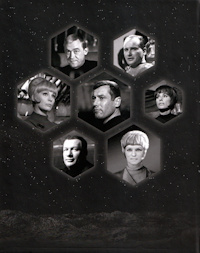
Cover
Cover
Cover
Cover
Cover
Cover


Image

Raumpatrouille Orion was luckily shot entirely on 35mm black and white film and the original negatives were reportedly stored in good shape in the Bavaria archives. They were probably used only to strike very few prints and apart from the original magnetic video master tapes made in 1966 for television broadcast not many other transfers are known to have been made. The 1999 DVDs were based on the video masters and the 2003 movie was probably cut together from prints.

For the new restoration, the negatives were scanned for the first time with modern equipment. D-Facto Motion, one of the biggest post production companies in Germany with ties to Bavaria Studios, did a careful restoration of the not entirely uncomplicated material. The series was, of course, scanned in its original 1.33:1 aspect ratio.

The majority of the series are straight camera shots, but the special effects done with optical printers were a completely different story. Historically, those effects have always been littered with dirt, damage and other dropouts and looked distractingly different than the “normal” footage of the series. Fortunately Bavaria has successfully resisted temptation to recreate the effects digitally and instead chose to do a proper restoration of the original classic visual effects.

The result is astonishing. It was pretty much clear for ages that the original film material of the series could potentially look amazing, but the new restoration makes the 35mm negatives positively shine. The original look of the series has been preserved but it now looks like a veil of decades has been finally lifted. The detail of the film material is amazing and while it varies a little bit sometimes depending on the scene, the sharpness looks natural and finally looks like film and not a 60 year old videotape.

The picture has been meticulously restored, there are no more scratches or dirt visible. Especially the visual effects have been cleaned up very nicely without getting rid of matte lines or other imperfections stemming from the complicated printing process. If at all, the effects sometimes look even better than they did before. The image is also much more stable, but sometimes there is still a little bit of movement in the frame which can also be attributed to camera shake.

There is mentioning of a de-graining and re-graining process in an article on the Bavaria website and this is really the only fault of the restoration – there is simply too little film grain and sometimes part of the image have been filtered while other parts still exhibit some residual film grain. This is only visible on closer inspection but could have been done a little better and more consistently. Overall, this does not distract from the film look but on larger screens especially in the 4K UHD version could be an issue. A more consistent grain level would have been nicer, but maybe the negative was really not very grainy – after all, this is the first time the film negative has been seen since the series was shot.

The grading is also a huge improvement because the previous DVD and TV broadcasts have always had problems with the black level and too bright parts of the image. On the new transfer, black is really black and not grey and the frequent blooming of the highlights has also been reigned in. The new transfer has a pleasant greyscale palette and amazing tones that look like aproper black and white film now.

The movie was also restored along the seven episodes, but because it was edited together from inferior sources back in 2003, it had to be re-assembled from the existing restored master and the few newly shot sequences have been seamlessly edited into them.

Because the series was originally shot in 25fps to conform with the German PAL TV standard, it has been encoded in 1080i25 on the Blu-Ray. Sadly BD standard does not allow for a progressive 25fps framerate, but this is not a problem and still gives a proper progressive playback.

Except the slightly overzealous filtering, Raumpatrouille Orion has never looked better. This is a restoration that was worth waiting for almost 25 years.

Sound

Raumpatrouille Orion was, of course, mixed only with mono sound for the television broadcasts. Only in 1999 for the first DVD release an 5.1 upmix had been attempted, but this was done from mono sources only and exhibited some terrible flanging. During the new restoration, the sound was also modernized but this time it was done right.

The German 7.1 Dolby Atmos track is a much more careful remix and actually a sound restoration. For the first time the whole soundtrack has been disassembled, restored and put back together. Especially the amazing soundtrack by Peter Thomas benefits from this because the original stereo or maybe even multitrack music masters have been used for the first time to remix the music. The result is a very modern sounding musical accompaniment that really sounds futuristic even though Peter Thomas and his Orchestra had not even used synthesizers in his score. Especially the bass has been much improved and the instrument separation is amazing – it’s space music indeed and uses the rear channels to spread around the soundscape a lot.

The dialogue track also sounds considerably fresher and less muffled than before, but is thankfully still anchored in the middle channel without any directional games. That is the task of the sound effects and the foley track – for the old 5.1 upmix, a bunch of inappropriate new effects were added, but it sounds like that was not done here at all. Instead the available effects track was taken apart and carefully stereoized in a way that sounds completely natural. There are a couple of surprising, but well done uses of the surround channels as well. It’s not a surround spectacle but a remix that sounds like it was done in the 1960s for a multitrack cinema presentation. The overall sound is very warm and pleasant with a much more pronounced dynamic.

For purists, the original mono mix has also been restored and preserved and does not sound at all bad – presumably a proper first generation magnetic master was located along with the film sources. While it does sound less exciting and more aged than the 7.1 track, it’s still nice to have it included on the disc.

Sadly, Bavaria has missed a big chance to create an English dub or at least include English subtitles on the Blu-Ray to give the international audience a refreshed look at the German Star Trek twin. At least there are now German subtitles on all episodes and the movie.
.

Bonus Materials

The bonus material, solely present on the last disc on the Blu-Ray set, seem to be completely ported over from the earlier release of the movie. Sadly, no new extras for the Blu-Ray have been produced. The menus have a nice retro look and are not too gimmicky.

The Bavaria Spezial (3:28) was already present on the very first DVD release. It’s an unfortunately only very brief excerpt from a gala held in honour of the 30th anniversary of the series in 1996, in which Dietmar Schönherr, Wolfgang Völz, Eva Pflug, Friederich Beckhaus, Claus Holm and Ursula Lillig once again appeared together on television.

The Musikclips are a collection of loosely themed music videos:
• Barfuss im Weltall from 2003 (3:34)
• United Space Orchestra (3:48)
• Enthüllung Brandenburger Tor (4:32) is actually the most interesting clip because it starts with a short interview from 2002 with Peter Thomas, whose orchestra played at the unveiling of the restoration of the Brandenburg Gate in Berlin on October 3, 2002.
• Warp Back to Earth (4:03) by Peter Thomas & The Maxwell Implosion was already present on the first DVD.

The Kinotrailer Deutsch (1:30) is actually a trailer for the Blu-Ray and the English Trailer (3:11) is for the 2003 movie with an English voiceover but German dialogue from the series.

Kinopremieren-Eindrücke 2003 (6:08) are a few shaky videos from the premiere of the movie in the historic Lichtburg cinema in Essen.

The Synchron-Szenen are a few clips in Hungarian (00:56), Italian (1:13) and French (2:09). The French clip is the most interesting because unlike the first two it is not dubbed, but a rare surviving scene from the alternate French version of the series with a French actor speaking his native language among everyone else speaking German on set.

The Interviews seem to have been conducted for the 2003 movie premiere and are much too short, which leaves you wondering if there is more interview material around that could have been made into a little documentary.
• Dr. Michael Braun / Regie (1:35)
• Theo Mezger / Regie (2:03)
• Werner Hierl & Götz Weidner / Tricks & Modeldesign (1:41)
• Margit Bardy / Kostüm (1:20)
• Oliver Storz / Team WG Larsen (1:54)
• Peter Thomas / Komponist (1:21)
• Rolf Zehetbauer / Filmausstatter (2:05)
• Elke Heidenreich / Helga Krapp (0:44)

Comments off

Blu-Ray Review: Project Hail Mary

Due to several heat waves and a generally terrible summer, it took me a while to get this review ready even though the disc was already released in late August: it’s Project Hail Mary, the movie I really wanted to review next. The second adaptation of an Andy Weir book is enormously fun, exciting and could not have been better, but the Blu-Ray is somewhat of a disappointment. Where are all the extras? I’m glad that we’re at least getting an entertaining audio commentary from the filmmakers and a small handful of deleted scenes, but it’s weak compared to the great extended edition of The Martian from a decade ago. It still looks better than the streaming version, so this disc is recommended nevertheless.

Continue to Review »

Kommentar schreiben

Blu-Ray Review: Project Hail Mary

Project Hail Mary
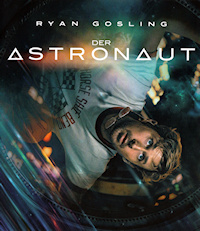
Cover

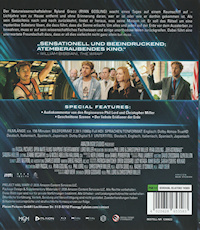
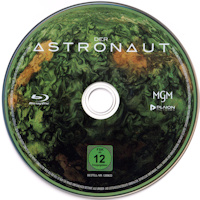
Title Project Hail Mary (Der Astronaut)
Studio MGM / Amazon Studios (2026)
Released by MGM / Plaion (2026)
Disc Type BD-50 (42,4 GB) Bitrate ø 30 max. 40
Runtime 156:31 Minutes Chapter 24
Region B (Germany) Case Amaray
Format HD 1080p24 AVC
Image 1.78:1 / 2.39:1 16:9 yes
Sound Dolby Digital Atmos True HD 7.1 Surround English Dolby Digital 2.0 Mono German, Italian, Spanish, Japanese 2.0 Mono Commentary
Subtitles English, German Italian, Spanish, Japanese
Rating FSK 12
Extras • Audiokommentar von den Regisseuren Phil Lord und Christopher Miller
• Geschnittene Szenen
• Der liebste Eridianer der Erde

The Movie

A lone astronaut wakes up in a big spaceship after a long hibernation. At first, he does not know who he is or why he is there. Gradually he begins to remember – he is Ryland Grace, the only survivor on a mission to a far away solar system to find our why Earth’s sun is dimming rapidly. At first he thinks he is all alone but then another spaceship joins him at his destination…

Andy Weir literally struck gold in the early 2010s with his unlikely story of an astronaut accidentally marooned on Mars. It took a while for The Martian to get popular but after its first free publishing on Weir’s website the novel became a surprise hit and was successfully made into a movie by none other than Ridley Scott with Matt Damon in the title role. Could Weir do it again with a follow up? Not immediately, as it turned out.

Weir’s second book Artemis, a hard science fiction story about Jazz, a smuggler in the titular first lunar city who is entangled in a high-stakes heist, was far away from the more realistic Martian. While quite a bestseller, it failed to catch on like its predecessor. The movie rights were sold to 20th Century Fox even before the book was published but remained in development hell. Phil Lord and Chris Miller, fresh off their successful attempt to turn a marketing junket into a satirical animated farce with The Lego Movie, were attached as directors but never got very far.

Meanwhile Andy Weir was busy going back to his roots by writing a new story with fewer characters but with an even broader scope than Artemis. A story about Earth’s demise by a rapidly cooling sun partly came from an earlier attempt of creating a new story but the lone astronaut on the way to save the planet while also making contact with an alien life form was new – hard science fiction indeed. Some parallels to The Martian, especially the Robinsonade-esque setting, lots of scientific problem-solving and the return of the humour that was lacking in its predecessor helped to make the book a much more relatable story, it was still more science-fiction than its predecessor but not completely implausible.

When Project Hail Mary was released in 2021, skepticism abounded but even the hardest critics could not find a lot of faults in the novel. Especially the audiobook, narrated by the amazing Ray Porter, brought even more life into the story. Again, the movie rights were sold before the book’s publication, this time it was snapped up by Metro-Goldwyn-Mayer. What could go wrong? Actually, not a lot, except the 2022 sale of MGM to Amazon. It did not mean development hell, but still a longer delay.

Meanwhile, there was a curious parallel development going on. In 2017, the Czech-American author Jaroslav Kalfař had published The Spaceman of Bohemia, a relatively unknown psychological science-fiction drama that also involved a lone astronaut meeting a multi-legged alien in space. Apart from this premise, there were absolutely no similarities to Andy Weir’s story which came out four years later. Nevertheless, Netflix must have heard about the film deal between MGM and Andy Weir in 2020 and quickly greenlit an adaptation of Kalfař’s book. The low-budget production with Adam Sandler as the disheveled bohemian astronaut was released in 2024 but mostly garnered negative reviews and failed to make much of a splash. If it was designed to steal Project Hail Mary’s spotlight, it completely failed.

Project Hail Mary remained greenlit among the chaos that surrounded the studio after its sale to Amazon. with Phil Lord and Christopher Miller on board, despite their infamous firing from Solo: A Star Wars Story in 2017. They had not directed a movie since that incident, but were busy producing and writing several projects. Originally, they wanted to write the screenplay for Project Hail Mary as well, but they were busy with their second animated Spider-Man movie Across the Spider-Verse.
Fortunately they were able to get the best alternative with Drew Goddard, who had already adapted The Martian ten years earlier and knew how to work perfectly with Andy Weir’s book. The secret lay not in cutting but in condensing the relatively long and detailed novel without compromising the structure and atmosphere.

This time Andy Weir still tells his story partly on Earth and in space – but with the huge difference that the Earth-bound story happens in the past and is told in Flashbacks due to the main character’s amnesia. This allows the story to gradually introduce him to the readers, which takes up a considerable part of the plot. Like its predecessor, the book is still written from a first person perspective, but as a narrative instead of a diary.

A lot of careful decisions had to be made to condense the book into a workable script. Lots of science had unfortunately to be jettisoned, especially the extended explanations of the petrova line and astrophage were reduced into very short sequences to give the main story more time. This also resulted in considerably less apocalyptic drama because the results of the dimming sun were heavily reduced in the movie. This was a good decision that allowed the movie to be more positive and hopeful instead of relying on constant doom, mostly thanks to the humorous style of the directors.

Like the different versions of Douglas Adams’ Hitchhiker’s Guide to the Galaxy, the movie incarnation of Project Hail Mary exists as a separate entity from the book. It’s not just a straight adaptation of Andy Weir’s novel, but an independent version of the story that does not have to incorporate everything from the book. Nevertheless, Drew Goddard and Andy Weir took great care to keep the story and the characters successfully intact.

The biggest question in adapting Project Hail Mary to the big screen was, of course, casting the lead role. The obvious and maybe lazy choice would have been Matt Damon, but he was already busy preparing to star in Christopher Nolan’s epic adaptation of Homer’s Odyssey. It also would have made Project Hail Mary into The Martian II and while Damon would have been amazing as Ryland Grace if he had not been Mark Watney before.

It was author Andy Weir himself who made the proactive move to send his manuscript to his choice of actor long before the movie got started. It was Ryan Gosling, the Canadian actor who had started his career in television in the 1990s and had since graduated to major Hollywood productions in all sorts of genres from dramas, action, comedy and even musicals. He had shared the screen with Harrison Ford in Denis Villeneuve’s Blade Runner 2049 and even played Neil Armstrong in the successful 2018 biopic First Man.

Fortunately, Ryan Gosling was so enthusiastic about the novel that he not only agreed to play the main character but also had a hand in securing the movie rights. Together with Andy Weir, Phil Lord and Chris Miller and Drew Goddard he helped to bring Project Hail Mary to life in front and behind the camera. Playing the disillusioned ex-scientist, teacher and reluctant astronaut on two different levels was not easy but Gosling accomplished it surprisingly well.

Ryland Grace came naturally to the actor, walking a fine line between portraying a hero, a coward and a clown. Comedy is a necessary ingredient of Project Hail Mary and the actor had a lot of fun creating his character’s mannerisms with some well-timed physical comedy that was already hinted at in the book. It’s not all fun and games though, because the story does get dramatic and sad in several places and Ryan Gosling easily masters even those rare scenes. Overall, Gosling is a huge surprise and will even convince viewers who do not particularly like him in other movies.

Compared to The Martian, Project Hail Mary has a relatively short cast list but one other major character had to be cast very carefully. Project leader Eva Stratt has a much lengthier appearance in the book and while her part was necessarily smaller in the movie adaptation, she still is the key character in the flashbacks. The part needed someone special and Phil Lord and Christopher Miller found her in the busy German actress Sandra Hüller, who had started her career in the theatre but had also branched into movies and television since the mid-2000s.

Slightly older than Ryan Gosling, she embodies the strict authority figure of the story to perfection – although compared to the book, her character was made less severe and menacing but she is still the main antagonist of the story. Sandra Hüller does her best with her relatively short appearance, but despite a few powerful and memorable moments the script does her character a disservice by criminally underutilizing her.

And then, of course, there’s Rocky. The silicon-based alien is actually the main reason for the whole story of Project Hail Mary because without him, it would simply be boring. The concept of a non-humanoid alien from a strange world utterly different from Earth is nothing new but has rarely been successfully attempted in mainstream science fiction. Andy Weir pulled it off surprisingly well by making Rocky inherently friendly with the same predicaments as his human friend but still with many physical differences that the two characters have to overcome to work together.

In the book, Rocky’s first interaction with Grace takes up a considerable amount of the story and is a delight to read, but for the movie, especially the inaugural language learning phase had to be condensed a lot. It still takes about an hour until the movie reaches that point, but the rest of the story concentrates mainly on Rocky and Grace with the flashbacks taking a lesser role.

Language was still incorporated into the plot as a major source of humour with Rocky talking to Grace through speech-to-text that basically turns into a Star Trek-like universal translator as the plot goes along. The alien whalesong-like sound language that was so well represented in the audiobook was elaborately created by sound designers Ethan Van der Ryn and Erik Aadahl, but sadly isn’t heard nearly long enough in the movie.

Designing the spider-like stone creature could have gone terribly wrong, but the filmmakers made the unusual decision not to create the friendly alien exclusively as a computer-generated creature. To accomplish this, they turned to puppeteer James Ortiz and creature designer Neil Scanlan, who worked together from early design concepts to create the very special alien that could appear on set together with Ryan Gosling.

Scanlan had started his career in the early 1980s in England working as a stop-motion animator and became involved with Jim Henson’s creature workshop, later even heading the creature and makeup department for the third batch of Star Wars movies. The always busy designer was paired with the still relatively young James Ortiz, who had mainly worked in theater before designing and performing his own puppets. They both jointly created not only Rocky’s appearance, but also his movements and mannerisms that were only superficially mentioned in the book.

Part of Rocky’s appearance still had to be created with CGI and a lot of digital cleanup was necessary to remove the puppeteer from the filmed image, but he still appears to be absolutely real. The five-limbed rock is not inanimate at all and a lot of fun to watch, as lots of small details from the book have been incorporated into his intricate design. The combination of puppeteering, animatronics and computer graphics is so successful that it looks absolutely seamless and utterly charming. Rocky is not the nightmare monster he could have been – he is cute, playful and maybe the most creatively designed aliens in film history.

Rocky’s voice was provided by James Ortiz on the set but originally the filmmakers planned to replace him with another more prominent voice actor. Hearing his temporary tracks made them reconsider and Ortiz was brought back in post-production to re-record his dialogue – an amazing decision that makes Rocky come alive even more. Even though Ray Porter created Rocky’s Voice magnificently in the audiobook, James Ortiz really IS Rocky even though he is only supposed to be a speech synthesizer.
Having Rocky in physical form on set was an amazing benefit for Ryan Gosling, who knew right from the start how his alien friend would look like. Not having to act against thin air was amazing for the actor and it made Project Hail Mary almost into a buddy movie. It’s a little bit like The Odd Couple in Space, Grace is a perfect Oscar to Rocky’s Felix.

With Grace, Rocky and Stratt in the lead the other actors in the movie almost seem insignificant. This is the only major failing of Project Hail Mary, but a necessary one – another hour of runtime could have been devoted to the flashbacks, but that would have really strained the length of the movie. Only Lionel Boyce as the security guard Carl assigned to Grace in the early flashback sequences makes a bigger, very funny appearance but all other actors only appear in fleeting glimpses. Ken Leung, Milana Vayntrub and Malachi Kirby as the original crew are excellent but sadly do not have much to do in the movie.

For the camera work, Phil Lord and Chris Miller turned to a new collaborator in Australian cinematographer Greig Fraser. With lots of impressive big-budget productions like Dune and The Batman and even two academy awards under his belt, he was perfect for Project Hail Mary, even though the filmmakers did not have a shiny, perfect science-fiction look in their mind at all.

While The Martian was produced in 3D ten years ago, Project Hail Mary went into a completely different direction. Early in the pre-production, a cooperation with IMAX was forged to bring the movie to the biggest screens possible in the world. By shooting with digital Arri Alexa 65 cameras and special anamorphic lenses that stretched the image vertically instead of horizontally to create the 1.43:1 aspect ratio, both digital projection and analog film prints in 70mm 8-perf horizontal IMAX and other large formats were possible. The film-out process Greig Fraser had already used on the Dune movies was successfully utilized here again, giving Project Hail Mary a beautiful organic look.

The directors and the cinematographer had also made the risky decision to shoot for several target formats and also split the movie between a more traditional 2.40:1 scope presentation for the flashback sequences and a full IMAX frame for the “present day” parts that could be cropped to 2:1 or 16:9. Changing aspect ratios were unthinkable only ten years earlier but the new rivalry between television and cinema made it inevitable as a stylistic decision.

Project Hail Mary’s unique presentation was not result of the two different aspect ratios but also of an unusual colour timing. While the flashback sequences were grey and almost monochrome, the rest of the movie looked warm, friendly and amazingly colourful, a result of the film-out process that used two different Kodak film stocks. Especially the sometimes claustrophobic scenes inside the Hail Mary and the wonderful space sequences benefited a lot from this technology.

For the production design, Phil Lord and Chris Miller hired veteran designer Charles Wood, who had started his career in the early 1990s and had since then worked on a lot of big budget science fiction and fantasy productions, some of them in the Marvel universe. The biggest challenge was, once again, to design a realistic space ship of the near future. The Hail Mary needed a less perfect and polished look than The Martian’s Hermes because it is supposed to be engineered together in a hurry. To achieve this, Wood again enlisted the help of NASA by visiting JPL and the Kennedy Space Center for inspiration – with great success.

Instead of relying on greenscreens and digital backgrounds, the spaceship interiors were almost completely built as a lifesize set for Grace and Rocky to romp through. Mostly it does not even look remotely like a proper spaceship, but a submarine, underlining the slapdash way the ship is supposed to be cobbled together. The circular wall-to-wall cockpit also looks fascinating and not too futuristic.

While the filmmakers had avoided using greenscreens at all cost and only used CGI to remove the puppeteers and other necessary elements, computer graphics were still necessary to create the space scenes. Five different effects houses, among them ILM, Framestore and Sony Imageworks, worked on the movie to create over 2000 shots. The Hail Mary and Rocky’s ship could have been traditional models, but for entirely practical and also financial reasons the filmmakers did not quite go that far.

The visual effects are, however, absolutely spectacular and everything you would expect from a movie like Project Hail Mary. Two unique spaceships who even perform a delicate dance synching up their rotations in a lovely homage to Kubrick’s 2001 – only set to a tango instead of a waltz – are just one of the beautiful highlights of the movie. There are also some breathtaking action sequences in the second half of the story with amazing spacewalking and seat-of-your-pants flying that keep the viewers on edge.

While Phil Lord and Chris Miller had relied on Devo founder Mark Mothersbaugh in the past for a lot of movies, this time they enlisted British composer Daniel Pemberton, who had already worked on the animated Spider-Man movies so he was not entirely unknown to the filmmakers. His approach for Project Hail Mary was absolutely astonishing and not even remotely comparable to traditional science-fiction scores. With a heavily rhythm-based approach incorporating many unusual percussive instruments but also featuring a full orchestra and even a big chorus, Pemberton knows how to set the mood perfectly.

Even though the movie is not particularly religious despite its title, Pemberton has incorporated the Gregorian Dies Irae choral chant as a central theme into the soundtrack. This is something many film composers going back to the 1920s have done before, but rarely in such an amazing way. The descending notes of the Dies Irae are not exclusively a death chant but also a more hopeful request for grace and this is the way Daniel Pemberton uses them in many important moments of the movie, setting the melody in both minor and major keys. His score makes Project Hail Mary come to life in a wholly unexpectedly wondrous way.

In addition to Pemberton’s amazing score, Project Hail Mary also features more than a handful of songs, some of them just briefly and others much more prominently. Harry Styles’ Sign of the Times, which was heavily featured in the promotional campaign, is actually not in the movie in its original version, but instead a Karaoke bit sung by Eva Stratt – something Sandra Hüller actually chose herself. Other songs included show a distinct whimsical taste by the filmmakers, including musicians like Miriam Makeba, Kris Kristofferson, Dennis Wilson, Neil Diamond, and Ike and Tina Turner.

Later in the movie, the filmmakers also pulled off one of the great stunts of music licensing: including a Beatles song! Two of Us represents the four probes named after the band members in a perfect moment in the final moments of the movie. Reportedly another Beatles song, possibly Don’t let me Down, was also cleared for the movie but ultimately not used.

The first assembly cut made by editor Joel Negron was reportedly around six hours long, which would have been enough for a whole television miniseries – but since Project Hail Mary was supposed to be a single movie there was a lot of painful editing in post-production. The first time the movie was shown to test audiences it was still almost four hours long. An early script that was leaked on the internet showed considerable differences to the finished movie, which turned out to be 155 minutes – even longer than the extended version of The Martian.

The first enigmatic preview trailer of Project Hail Mary was released at the end of June 2025, which launched a huge marketing campaign that reached its heights with a multitude of new trailers and filmclips posted on social media starting around Christmas. The premiere was held in London on March 9 with the worldwide releases in cinemas following on March 19 and 20 in lots of different formats. While only 16 prints in 15-perf 70mm IMAX were made and most of those didn’t make it out of North America, more analog prints in “smaller” 70mm 5-perf and even 35mm prints were made in addition to the digital masters.

Even though the different formats initially caused some confusion, Project Hail Mary turned into one of the biggest movies of the year with a worldwide boxoffice of over $600 million. Even most critics were very happy with the movie as a prime example of intelligent, good-natured science fiction and only few dismissed it as too generic, boring and a cash cow for Amazon.

Overall, Project Hail Mary is successful as both an adaptation and a science-fiction movie in its own right. While Grace and Rocky are the heart and soul of the story, they are not stealing the show completely and are part of an amazing space opera that is a worthy successor to Ridley Scott’s The Martian. Phil Lord and Christopher Miller as directors were a great choice that perfectly matched the quirky humour of Andy Weir and Ryan Gosling turned out to be the perfect choice for Ryland Grace. Even the involvement of Amazon as the new owners of MGM could not ruin this movie.

The Disc

Project Hail Mary was first released in cinemas on March 19th and it took less than two Months until it was available to buy on Amazon Prime as a digital stream on May 12th with a MGM+ channel release on June 18th – and on July 3 it was added on Amazon Prime for free. It was by no means certain at this point that a physical disc release would even be coming, but it finally did in late August.

The German Blu-Ray and 4K UHD discs were released by Plaion Pictures because Amazon does not seem to have a physical media distributor in Germany anymore. While manufactured in Germany, it seems to be an international master that even has English-language menus. While the disc has an amazing image and sound quality, the extras are only comprised of a director’s audio commentary, ten minutes of deleted scenes and one short featurette – which is disappointing considering there must be a wealth of unseen material. Someday there will probably be a better edition with more extras, but nothing specific has been announced yet except a nebulous mention of a 3-disc-boxset that is supposed to contain a full-format 1.43:1 IMAX edition in addition to more extras.

Cover

Image

The video master used for the first Blu-Ray and presumably also 4K UHD releases of Project Hail Mary seems to be the version that was treated with the film-out process, making this a scan of a 70mm 5-perf IMAX print. The quality is nothing short of amazing with the added bonus of the warmth of an analog film stock.

The aspect ratio on this master is a full 16:9 frame for the scenes in the “present”, presumably cropped from the 1.43:1 IMAX ratio and 2.39:1 for the flashback sequences. Showing the full 1.43:1 image would have been interesting, but an 1.78:1 crop is more sensible because that way no windowboxing for the non-flashback scenes is necessary. There is a bit in the deleted scenes where the “wide” scenes are cropped to only 2:1 and maybe an unified 2:1 aspect ratio would have been better, but the compositions look great in this way too.

While the streaming version suffered somewhat from compression artifacts, the Blu-Ray has the advantage of a high bitrate that almost tops out at 40 mbit/s, delivering a very clean image. This is especially important for the proper reproduction of the film grain that is moderately visible in the 1.78:1 sequences, but as chosen by the filmmakers is hardly visible in the 2.39:1 shots. Comparing the main movie with the deleted scenes that were not treated with the film-out process reveals that the analog film makes the image look considerably more alive and organic while the deleted scenes look much more lifeless and digital.

The re-transfering of the film-out source has, of course, not left any visible problems – there are no scratches or dust visible anywhere, but it would have been funny to include some workprint-like scenes at the end of the movie to show how spoiled we are today by digital technology. Even the sharpness is absolutely excellent without resorting to any digital filtering.

The colours are reproduced brilliantly as well. Like the film grain, they look radically different in the two “timezones” of the movie: while the “present” looks warm and friendly and often spectacular in the space scenes, the flashbacks are deliberately cold and grey. Even without any HDR enhancement, the colours look like reference material on ordinary HD screens.

Nowadays it’s not hard to make a Blu-Ray of a new movie look bad but with the film-out process it still could have gone wrong. Luckily, the Blu-Ray of Project Hail Mary delivers an amazing quality that makes owning the disc worth it.

Sound

Project Hail Mary comes with the gold standard of soundtracks, an English Dolby Atmos True HD mix – although the German, Italian, Spanish and Japanese soundtracks are only available in “ordinary” Dolby Digital 5.1. As usual, I have listened only to an analog surround 4.0 downmix but even that sounds amazing.

The Blu-Ray features a pleasant, not too loud or forceful sound mix that is almost traditional in creating its surround sound mainly with Daniel Pemberton’s all-encompassing music but also has some very intricate sound design to offer. That includes an almost strict silence in all space sequences except music and voices, but also very detailed and realistic ambient noises inside the spaceships. The voices are mostly anchored to the center channel but occasionally veer off to the sides, although never in a distracting way. Direct surround effects are surprisingly rare but when they appear they are well placed.

The German soundtrack seems to be largely identical to the English original, but the voices, as usual for a dub, sound much more artificial even in the case of Rocky. There are subtitles available in all of the soundtracks’ languages.

Bonus Materials

Compared to the full-to-the-brim extended edition of The Martian, the first (and hopefully not only) Blu-Ray release of Project Hail Mary is a big disappointment in the extras department, especially considering the big success of the movie. The disc even starts without a company logo and a static menu.

The Audio Commentary with Directors Phil Lord and Christopher Miller was originally recorded for the TheaterEars app to be listened to in the cinema, but it works equally well at home from the discs. While Andy Weir has sadly not joined in, the filmmakers fully make up for the absence of the author and keep up the pace very well. It’s not really a technical commentary, because the filmmakers like to focus on the human aspect of making their movie, talking more about the people working with them than about themselves. It’s a very fun and entertaining commentary that is worth watching the movie twice.

The Deleted Scenes (9:58) consist of the five sequences Day 1 Food paste, I think I’m handling things pretty awesome, How to put on a spacesuit, You Sleep I watch and Maybe we’re cousins. While it’s disappointing that there is only ten minutes of material with a reportedly long cut of three and a half hours, those are very funny scenes that would have perfectly fit back into the movie.

There is sadly no long-form documentary at all, just the short Earth’s Favorite Eridian (7:53) featurette that has already been shown on Youtube and other platforms during the movie’s promotional campaign.

Comments off

Blu-Ray Review: The Martian [Extended Edition]

Remember this site still exists? My promise to write something new before Easter of course failed, but recently I was spurned on by the release of Project Hail Mary – which I loved – to continue writing a review I actually started ten years ago before the world collapsed. It’s, of course, The Martian, which was the last movie I watched together with my mother Angela before she passed away in Spring 2016. I’m glad she was still able to watch the theatrical cut on DVD, but sadly she never got to see the extended version which I got only three years later.

With Project Hail Mary coming out on Blu-Ray later this Month, I thought it was finally time to finish the review of The Martian because it’s not only one of my favourite movies but also one of the best Blu-Ray releases of the last then years. They don’t make them like that anymore!

Continue to Review »

Kommentar schreiben

Blu-Ray Review: Gremlins

I should have posted this before the holidays but I completely forgot that I had this review ready – it’s Joe Dante’s Christmas classic Gremlins on Blu-Ray! I actually re-wrote the whole article from a shorter German version. Is it a horror movie or a comedy? The movie can’t really decide what it wants to be but it’s one of the most fun movies from the Amblin stable in the mid-1980s. A review of the sequel will be up sometime… later. Before Easter. I promise!

This Blu-Ray isn’t exactly new but as usual I bought it in an Amazon sale and it looked amazing on my humble home cinema setup – and it’s great that all the extras of Warner’s early 2000s special edition have been retained!

Continue to Review »

Comments off

BluRay-Review: Gremlins

Gremlins
Cover

10.11.2025 #598

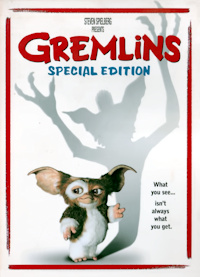
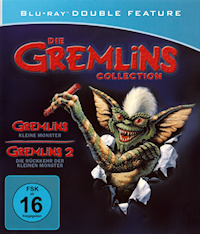
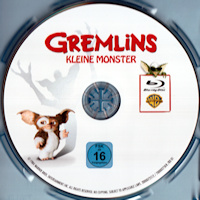
Title Gremlins
Studio Warner Bros. / Amblin Entertainment (1984)
Released by Warner Bros. (2012)
Disc Type BD-50 (26.7 GB) Bitrate ø 35 max. 40
Runtime 106:15 Minutes Chapter 28
Region Region-Free Case VIVA
Format HD 1080p24 AVC
Image 1.78:1 16:9 yes
Sound Dolby Digital TrueHD 5.1 Surround 1365 kbit/s English Dolby Digital 5.1 Surround English, German, French, Italian, Castellano, Spanish 1.0 Mono Portugese 2.0 Matrixsurround English, Commentary 1+2
Subtitles English, German, Italian, Castellano, Spanish, Dutch, Danish, Finnish, Norwegian, Swedish
Rating FSK 16
Extras • Over 10 Minutes of never-before-seen Footage
• Behind-the-Scenes Documentary
• Feature-Length Commentaries:
#1 With Director Joe Dante, Phoebe Cates, Zach Galligan, Dick Miller and Howie Mandel
#2 With Director Joe Dante, Producer Michael Finnell and Special Effects Artist Chris Walas
• Photo Gallery
• Theatrical Trailer

The Movie

Billy Peltzer (Zach Galligan) gets a strange Christmas gift: a small furry creature his father (Hoyt Axton) discovers in a mysterious shop in Chinatown. It comes along with three rules: protect it from bright light, do not feed it after midnight and do not let it get wet. This is, of course, an accident waiting to happen, and when Billy accidentally spills a glass of water on the little guy he calls Gizmo, he ends up with six new creatures, all of which are a little more dangerous and devious than the original. Together with his girlfriend Kate (Phoebe Cates) Billy tries to protect his little hometown from the dangerous beasts as good as he can…

Gremlin: imaginary mischievous creature supposed to cause mechanical or other failure.

It all goes back to the 1940s, when British RAF pilots and engineers in the second world war coined the term ‘Gremlins’ to explain strange faults in the machinery that appeared for no reason. Writer Roald Dahl, himself a former RAF pilot at the time, made the war folklore into his first book that was also supposed to be a collaboration with Walt Disney for an animated movie. The movie never came to be and the idea of Gremlins slowly faded from public consciousness, but never went away completely.

In the early 1980s, Hollywood was on top of its game. Each year amazing movies of all kinds stormed the boxoffice from all sorts of filmmakers. One of the hit-making machines was called Amblin Entertainment, founded by director Steven Spielberg and the producer couple Kathleen Kennedy and Frank Marshall. The first movies of the studio-independent production company were Michael Apted’s small comedy Continental Divide and their first two big hits Poltergeist and E.T. – The Extra-Terrestial. The latter made Amblin into a new household name in Hollywood that promised great things ahead. And then something unexpected arrived at the doorstep of Steven Spielberg – it was the Gremlins!

It was young filmmaker Chris Columbus’ idea of the Gremlins, a story about the old notion of mischievous critters ruining machinery and everyone’s good time. Possibly inspired by Road Dahl’s long-forgotten story but more based on the actual RAF folklore, Columbus had not really thought about making it actually into a movie. In the end Spielberg was so enarmoured with the concept that he bought the script and decided to bring it to Amblin. Busy with other projects he let Columbus loose on the story and started looking around for a director. Reportedly his first choice almost became Tim Burton – what a movie that would have been! – but then he picked Joe Dante, who was already working on Amblin’s Twilight Zone Movie and had some horror experience with the low-budget Piranha and the considerably higher-profile The Howling. Dante also brought his producer Mike Finnell into the project as his collaborator, the start of a long working relationship.

Steven Spielberg must have been attracted to Chris Columbus’ idea because it was somewhat similar to the two big projects of his friend George Lucas – Star Wars and Indiana Jones, both inspired by the b-movie serials of the 1930s and 1940s. Spielberg and Lucas had not tackled the horror movie genre yet and that was exactly what Columbus was aiming for. The busy director was only happy to delegate this project to others and let Joe Dante, Mike Finnell and Chris Columbus loose after he found a roof for it in the shape of Warner. It marked the first, but not the last time the studio worked together with Amblin Entertainment.

While Chris Columbus was working on the script, Joe Dante took a gamble on the casting with the blessing of Steven Spielberg and Warner: instead of an expensive high-profile cast, Gremlins would be equipped with relatively unknown actors. For the lead role of Billy, the 19-year-old Zach Galligan was chosen. With only one acting credit but exactly the right amount of innocence and slight mischievousness he makes Billy the perfect nice guy who is still a little bit between being just a kid and a responsible adult. After all, Zach Galligan turns out to be a competent monster fighter along with quite a few of his co-stars.

The female lead was also a somewhat bold choice. Unlike Zach Galligan, Phoebe Cates had already appeared in several movies in somewhat risqué roles and the producers were somewhat worried the wholesome character of Billy’s girlfriend Kate would not be a good choice for her. But when Cates and Galligan turned out to be a good match with great chemistry during the casting process, all worries were set aside. Kate turned out to be Phoebe Cate’s signature role for more serious acting because in Gremlins she was not just a simple scream queen especially in a crucial earnest scene that was almost excised from the movie because she acted so serious.

With two relatively unknown actors in the lead roles, Joe Dante called upon the creme de la creme of supporting actors – but it was not celebrity casting. Instead the director chose the many character actors appearing in classic movies from the past to give Gremlins even more nostalgia. Opening the movie are not Zach Galligan or Phoebe Cates, but Hoyt Axton as Billy’s father, singer-songwriter-actor who had appeared in a few movies since the 1960s but whose acting career really took off after Gremlins. Sadly he is somewhat underutilized in Gremlins, taken out of the main action by the plot that sends his character out of the way. The mysterious shop owner is portrayed by none other than Keye Luke, the Chinese-American actor who had been a star in the Charlie Chan and Green Hornet serials in the 1930s and 1940.

Another familiar face from her many appearances in 1970s and 80s television series and occasional movies was Frances Lee McCain as Billy’s spunky mother Lynn who starts out as the gentle housewife but turns into a serious adversary for the Gremlins, deftly dispatching several of them in her own house – nobody messes with Mama Peltzer. Some of the secondary characters were suffering more, like the Peltzers Neighbours, the Futtermans. Played by Hollywood veterans Jackie Joseph and Dick Miller they are mainly there for comedic relief but also for purely nostalgic reasons.

The movie does not only have the Gremlins as antagonists but also two human ones. Judge Reinhold plays Billy’s boss Gerald in his few scenes convincingly slimy, but Polly Holliday really steals the show as Mrs. Deagle, the cruel dog-hating bank owner. She is literally an homage to The Wizard of Oz’s Wicket Witch of the East and even wears the right shoe colours. Holliday, actually more known for her less scary sitcom roles in the 1970s and 1980s, has visible fun playing her character as evil and over the top as possible – she’s an absolute delight to watch even though she appears only in a few scenes.

The real stars of the movie are, of course, the Gremlins themselves. While Joe Dante didn’t made his movie completely into a special effects extravaganza and CGI was still in its infancy, the completely analog visual tricks used to bring the Gremlins to life are wonderfully charming and not at all realistic in a style reminiscing old horror movies. Created and designed by visual effects specialist Chris Walas, who had worked with Dante before on Piranha, the Gremlins were completely unique and a complex mix of puppetry, animatronics and even stop-motion animation.

Gizmo, the original Gremlin is a little cute puppet and remains so for the entire movie. He seems to be designed entirely for marketing purposes and Gizmo puppets were indeed sold a lot in the 1980s and 1990s. His offspring are reasonably cute at first too, but in a wink to Invasion of the Bodysnatchers they transform themselves into the actual bigger Gremlins – and this is where the design of Chris Walas really shines. A horror version of the cute fluffy Mogwais, they were slimy with lots of sharp claws and teeth and were meant to be really scary – but still had a little bit of cuteness in them.

While the movie features a whole army of them in the second half, most are generic with little variations except three standout characters like their leader Stripe and a few specific parodies. Overall, the Gremlins were not meant to be completely realistic and the handmade approach to the complex puppetry was exactly the right mix to make them as outrageous as possible. Their humour is mainly the absolute chaos and anarchy they produce plus their love of imitating and sometimes parodying human behaviour.

Although the Gremlins were mainly brought to life by Chris Walas and his team of experts, a crucial part of the creatures were their voices. Joe Dante called up voiceover legend Frank Welker, who even then already had a long career specializing in animal vocalizations. He was glad to provide the scary grumblings of the grown Gremlins but recommended comedian Howie Mandel for the sweeter tones of Gizmo. They were also joined by the talented voice and sound impressionists Michael Winslow and Peter Cullen amongst others and even Joe Dante himself contributes a little bit to the multitude of the excellent creature vocal effects.

Joe Dante also had the fortune to get Jerry Goldsmith for the film music. While the opening titles use an old pop christmas song to get that 1950s feeling going, Goldsmith’s brilliant involvement in the movie actually begins in the pre-credits sequence that features Gizmo’s theme. A simple but lovely little melody that repeats throughout the movie in several variations, the little cuddly guy’s audio signature sets an early tone that does not last too long. In a slow progression from fun and quirky to dark and scary with a lot of prominent melody-led themes. The score culminates in the bouncy, cheeky and anarchic Gremlin Rag that repeats from an earlier chaotic scene for the closing credits. One piece of music Goldsmith had nothing to do with was the loud pop song Gremlins Mega Madness specially recorded by Michael Sembello for the cafe scene which stands out like a sore thumb and does not really match anything in the score.

Set in the little fictional town of Kingston Falls and shot on the same town set as Back to the Future did only a short time later, Gremlins is also a Christmas movie and all about how the creatures ruin the holidays for everyone. Parts of the movie are actually so saccharine sweet that they turn the story into a parody of a Christmas tale and even the ultimate festive movie of all time, It’s A Wonderful Life is actually shown on an in-movie television amongst some other movie references.

The slow transformation from feel-good holiday story into full-blown anarchic chaos meant that studio executives were literally horrified by the first uneven rough cuts of the movie, even though Chris Columbus’ early drafts were even more gruesome than the final versions. Luckily, Joe Dante had the power of Steven Spielberg behind him and together they managed to save most of the the movie against the objections of the studio bigwigs who realized that they might actually have a hit on their hands.

It’s unknown if Gremlins was ever planned for a Christmas release, but it feels like it was planned to be shown on this particular holiday. The complicated shooting and the long post-production process however meant that the movie was released in Summer 1984 and had to battle two other big-budget adventure productions: Indiana Jones and the Temple of Doom and Ghostbusters. Together they formed a trilogy of unstoppable blockbuster movies that dominated the cinemas not only in the USA, but also worldwide.

Gremlins alone grossed around 150 million dollars in the US and was certainly a huge success, but did not come without criticism. While many reviewers loved the mix of comedy and horror and recognized the movie’s efforts of being an homage to old scary movies, some derided it as a quick violent money-making scheme. The violence became one of the main points of criticism, especially because the movie was billed as a PG comedy and many viewers who took their children to the cinema were surprised by the gruesomeness of the movie.

If Gremlins does have a fault, then it is that the movie does not really know if it wants to be a comedy or a horror movie. While the filmmakers have attempted to put the two elements together, they were not entirely successful. The comedy works and the horror does too, but at times they clash against each other. Fortunately it’s only a minor problem that would have been more serious if the overall movie wasn’t so well produced.

The complaints about the violence that also hit Indiana Jones and the Temple of Doom led to a heated discussion of the ratings system and the creation of the PG-13 rating in the USA. Even in Germany Gremlins originally had a FSK 12 rating but was later upped to 16 for the home video releases, a rating that stands until today. It was often heavily edited for television broadcast but all VHS, DVD and Blu-Ray releases always contained the uncut versions. This added to the movie’s notoriety but actually the violence and gruesomeness was mild compared to “real” horror movies.

Despite its exhausting and complicated production and the studio’s skepticism, Gremlins not only turned out to be a huge financial success but also the start of a long-lasting franchise. Once Warner had recognized what Gremlins was capable of, a huge ad and merchandizing campaign was geared up that did not only feature puppets of the creatures and other toys but also several tie-in marketing campaigns featuring posters, greeting cards and even the food industry joining in. The big star was of course the cuddly Gizmo, but even the ‘head Gremlin’ Stripe made some appearances.

Of course, Warner quickly demanded a sequel, but director Joe Dante initially refused because he and everyone else involved in the production were exhausted by the complicated shooting process. More than five years went by while Warner shopped the idea around to several other directors, but nobody took the bait until Joe Dante finally agreed to make the sequel himself. The result was a completely different film than the original and while it was not quite as successful, it is still considered a classic like its predecessor.

Four decades after its release, Gremlins remains one of the great films of the 1980s because it’s simply fun and creative and not just a dusty artefact of its time. Although it spawned only one sequel, it has influenced the horror-comedy genre so much that many more or less successful imitations have followed – and there is even talk of a new Gremlins movie!


The Disc

Gremlins and its sequel were originally released on DVD in one of the first batches of discs available at the start of the format as a feature-less affair. They were later followed up by special-edition re-releases in the early 2000s with restored transfers and very nice extras headed by entertaining audio commentaries, deleted scenes and more. When Warner chose Blu-Ray over HD-DVD in the brief HD format war, Gremlins and Gremlins 2 were in the first wave released on the new format – with the same extras as on the old DVDs but with new high-definition transfers that looked better and cleaner than before.

This German release of the Gremlins Blu-Ray has a copyright date of 2012 on the cover but seems to have been authored in 2009. It is sold separately and also in the 2-pack “Gremlins Collection”, although these are the same discs. Despite its age, this release can still hold up and is probably only slightly overshadowed by the 2019 UltraHD release.

Cover border=

Image

Warner’s second digital transfer of Gremlins that appeared on the 2002 special edition was already looking pretty good but for the 2009 Blu-Ray release a new high-definition transfer was created that improved it a lot.

The film source was in a much better shape than in the previous transfer. Except a few instances of dirt in the upper part of the opening credits, the transfer was cleaned very well with absolutely no scratches or other damages visible anywhere. The film grain was, however, largely left intact and is more or less visible depending on the lighting with dark scenes a bit more grainy. The analog film look is very nicely preserved on this Blu-Ray.

Very much improved are also the colours. Everything looks more vibrant with better contrast and more balanced brightness especially in the many dark scenes which show a lot more detail. The image is also very stable without any frame instability that was still a problem on the older transfer.

Sharpness and detail are okay but somewhat limited due to the film stock – it’s as good as a “flat” shot movie from the early- to mid-1980s should look. No visible sharpening or filtering was applied to artificially boost the image which makes it look very natural and not digital at all like some early Blu-Rays of that time.

Overall this is a very nice transfer that still looks great on larger screens. The newer 4K version reportedly is somewhat sharper, but also has some colour problems and seems to be slightly zoomed in, so the Blu-Ray might be the better version.

Sound

The Gremlins Blu-Ray has a multitude of soundtracks, probably because Warner only made one disc master worldwide. Almost all languages are represented in 5.1 mixes but only the original English comes in Dolby TrueHD.

Gremlins was originally mixed in two-channel matrix surround Dolby Stereo for the general release but Warner also made a few 70mm prints with 6-channel magnetic sound. Those were probably the basis for the 5.1 mixes that have appeared even on the first DVD release and have been further improved for the Blu-Ray.

The English 5.1 mix is presented in Dolby TrueHD with 1365 kbit/s and sounds largely identical to the previous mix of the DVD, albeit somewhat clearer and more punchy. The original discrete sound mix already has a very nice soundscape for a 1984 movie when multichannel sound began to be really well utilized and this new mix doesn’t change that. With voices mostly anchored into the center channel the front soundstage is still very lively with sound effects and of course the music that also spreads over to the rear channels. Discrete surround effects are rare but when the Gremlins really get going so does the soundtrack, providing an immersive audio experience that is remarkable for a movie of this age. Bass and treble are excellent and even the voices, especially Hoyt Axton’s sonorous intro voiceover, sound very natural.

There is also an English two-channel Dolby Surround mix with 192 kbit/s that sounds considerably flatter and while it decodes well in ProLogic, but has much less surround activity than the 5.1 track. It’s not a simple downmix of the 5.1 track but probably an archival version of the original Dolby Stereo track for the 35mm prints – a nice addition, but not necessarily good to listen to.

The German, French, Italian, Castellano and Spanish tracks are probably the same mixes as the English 5.1 track but with the dialogue stems switched out. They are only encoded in Dolby Digital though, but at least with the maximum 640 kbit/s. Only the Portugese soundtrack comes in 1.0 Mono with 192 kbit/s, probably because a discrete dialogue track could not be found.

There are also subtitles in all the languages of the audio tracks with additional subtitles in Dutch, Danish, Finnish, Norwegian and Swedish – but only for the main movie. The extras are not subtitled.

Bonus Materials

The worldwide Blu-Ray releases of Gremlins have almost exactly the same extras as the 2002 DVD release that was billed as a special edition. While no new documentary was produced, two fantastic commentary tracks, a short featurette, and ten minutes of previously unreleased footage truly deserve the “Special” label and do not disappoint. The only letdown are the menus of the Blu-Ray, because there is not even a proper main one – only a popup menu for the settings and a one-page listing of the special features.

The crown jewels of the extras are the two Audio Commentaries, labeled “Filmmaker’s Commentary” and “Cast & Crew Commentary” in the menus. Director Joe Dante, producer Michael Finnell and special effects artist Chris Wales provide the first track, focusing primarily on the technical aspects of the filming. Anyone expecting dry, technical jargon will be disappointed – Joe Dante and Michael Finnell had already demonstrated their highly entertaining storytelling skills on the commentary track for Innerspace and here they reminisce with great enjoyment about virtually every facet of the film’s production. From the first, much more violent script drafts to Steven Spielberg’s regular checks and technical problems with the Gremlins puppets, everything is included – especially regarding the latter, “puppet master” Chris Walas has quite a bit to say.

The second commentary track is again led by Joe Dante, but this time actors Phoebe Cates, Zach Galligan, Dick Miller, and Howie Mandel, the voice of Gizmo himself, join in. This track is even more lighthearted than the first, offering more anecdotes and other funny moments. Joe Dante, Zach Galligan, and Howie Mandel handle the lion’s share of this track, while Phoebe Cates seems rather bored, and Dick Miller simply can’t remember anything – the latter eliciting a few good-natured laughs. After about an hour, the participants start to tire, resulting in longer pauses, which are made up for by the end of the film. Despite Joe Dante’s presence on both audio commentaries, there is very little overlap, so both tracks are worth listening for the sheer entertainment value.

The Behind the Scenes Featurette (6:21) is exactly what it says it is – a vintage 1984 promotion of the movie, but not overly commercialized. In fact it’s a compilation of some old interviews and set footage from the filming on the Chinatown set, along with a slightly tongue-in-cheek explanation of what Gremlins actually are. The director and some of the actors speak briefly, as does a grinning young Steven Spielberg, who apparently wasn’t entirely comfortable in his role as executive producer. It’s certainly not a proper documentary, but despite its short runtime, it’s a nice historical document that doesn’t feel out of place here.

A total of eight additional scenes are included. Over ten minutes of footage were unearthed for this DVD, and Joe Dante, Michael Finnell, Zach Galligan, and Phoebe Cates even recorded an optional audio commentary for these scenes. The scenes are well preserved and presented in their original aspect ratio but sadly only in 4:3 letterbox 480p. Among them are two subplots featuring the bank manager and Judge Reinhold’s character, which could have easily been integrated back into the film. It’s not just leftover footage from the editing room; there’s some genuinely worthwhile material included.

Three Trailers were selected as promotional material : the theatrical and reissue trailers for Gremlins and also one for Gremlins 2, all now presented in anamorphic 480p but not re-transfered in HD like the deleted scenes.

While the biographies and production notes from the DVD have been left off the Blu-Ray there is now a Photo Gallery containing about 20 production photos in both colour and black and white, but only in a very small format

Comments off

Blu-Ray Review: The Great Train Robbery

Yes, it’s been more than a year since I posted something here and it was entirely due to the fact that the end of 2024 and the beginning of 2025 were absolutely terrible. Maybe a new start is in order? I can’t promise anything but there is at least enough material to review around and I still had this review lying around in an almost ready state: it’s Michael Crichton’s 1979 railway heist caper The Great Train Robbery!

The Blu-Ray isn’t really new but I discovered it only recently and Koch Media’s German release is still the best one around worldwide. It also has a gorgeous based on the original poster art, something you don’t see much these days. Click through to the review, which is an expanded translation of a German version I wrote many years ago!

Continue to Review »

Comments off

Blu-Ray Review: The Great Train Robbery

Water
Cover

12.10.2024
#597

Title The Great Train Robbery
Studio United Artists (1978)
Released by Koch Media (2018)
Disc Type BD-50 (38.9 GB) Bitrate ø 35
Runtime 110:52 Minutes Chapter 8
Region B (Germany) Case Keepcase
Format HD 1080p24 AVC
Image 1.85:1 16:9 yes
Sound DTS HD-Master 5.1 Surround 2048 kbit/s English 2.0 Surround English, German  Dolby Digital 2.0 Mono 224 kbit/s Commentary
Subtitles German
Rating FSK 12
Extras • Audio Commentary by Michael Crichton
• Image Gallery
• Trailer

The Movie

In the year 1855, England and France were at war with Russia in the Crimea. The English troops were paid in gold. Once a month, the gold was loaded into strongboxes at the London bank of Huddleston & Bradford and taken to the station by trusted, armed guards. The convoy followed no fixed route or schedule. At the station, the strongboxes were loaded into the luggage van of the Folkestone train for shipment to the coast and from there to France. The strongboxes were transported in two specially made safes, made of one-inch thick reinforced steel. Each safe weighed 550 pounds and was fitted with two locks, each with two keys. A total of four keys were required. For security reasons, each key was kept separately. Two keys were entrusted to the railway superintendent, who kept them in his office. A third was in the care of Mr. Edgar Trent, the president of Huddleston & Bradford. The fourth key was given to Mr. Henry Fowler, manager of Huddleston & Bradford. The accumulation of so much gold in one place naturally aroused the interest of criminal elements in England, but until 1855 there had been no robbery of a moving train… (The Great Train Robbery, Intro)


Opportunity makes a thief – this principle was often in effect in the history of the British railways. In the early days of the English railway network in the 19th century, there were hardly any robberies or raids, but when more and more companies began to transport valuables, money or even gold by train, the railways became interesting for criminal elements. A very unusual incident went down in history as the first major train robbery: in 1855, a clever duo of thieves, William Pierce and Edward Agar, managed to steal a large shipment of gold from a moving train on the route between London and Folkestone.

This Great Train Robbery remained relatively obscure for a long time and only became popular again in 1963, when a recent railway heist hit the headlines that turned out to be one of the largest robberies in European criminal history. The escape of ringleader Ronald Biggs occupied the media for decades and led to numerous literary and cinematic adaptations. A young author named Michael Crichton, who had enjoyed great success with his scientific thrillers since the mid-1960s, was not really interested in the 1963 train robbery, but in the lesser-known robbery of 1855, which gave him an opportunity to delve into the Victorian criminal world and not just concentrate on the robbery itself.

His novel The Great Train Robbery was published in 1975 and became an instant bestseller, particularly praised for its gripping portrayal of the 19th century underworld. Michael Crichton had heavily fictionalized the story of the eponymous train robbery, but nevertheless had used the true events and people as a basis, ensuring a very authentic atmosphere that almost bordered on a milieu study. The reduction to three main characters and the detailed description of the preparation and execution of the train robbery in the context of a factual report enabled a much more exciting and entertaining story than a completely faithful depiction.

At the beginning of the 1970s, Michael Crichton had not only established himself as a bestselling author, but also as a brilliant director with Westworld and Coma, after his science-fiction novel The Andromeda Strain had already been made into a film in 1971. It was directed by none other than Hollywood veteran Robert Wise, but Crichton himself wasn’t involved much in the production. The Great Train Robbery was to be the first film adaptation of his own work that the author was able to direct himself. This was only possible due to the success of his previous movies, which he had written directly for the screen. Sadly, his previous studio home, Metro-Goldwyn-Mayer, was not at all interested in a historical train robbery story, but with the help of producer John Foreman and the financial support of producing giant Dino de Laurentiis, he was able to bring The Great Train Robbery to United Artists instead.

Michael Crichton was also lucky enough to be able to attract the right actors for his project. For the main chatacter of Edward Pierce, the romanticized version of the real-life crook William Pierce, Crichton was able to get Sean Connery. The scottish actor had hung up his secret agent outfit in 1971 with Diamonds Are Forever and since then tried to move as far away as possible from his previous image – which wasn’t always easy. Connery had at least established himself as a brilliant character actor in big movies such as Murder on the Orient Express, The Man Who Would Be King and A Bridge Too Far.

His part in Michael Crichton’s film was therefore particularly important to him – instead of a Victorian James Bond, Sean Connery clearly enjoyed portraying a mischievous gentleman crook who also had his dangerous sides. Although the Scottish actor returned to the screens as James Bond one last time a few years later, The Great Train Robbery was the beginning of a major career change and one of his most successful and underrated performances in the 1970s.

Michael Crichton was also able to find a perfect actor for the second lead role in the film, the “screwsman” Robert Agar. Originally, the director only wanted to hire British actors, but the Canadian Donald Sutherland was just the ideal choice for the role of the awkward safecracker. Sutherland had in fact started his career in England in the 1960s and was already a busy character actor in high demand. He showed his enormous versatility in satires and comedies, dramas and thrillers and even war movies. The Victorian master thief Agar was a signature role for Donald Sutherland, which he mastered not only with costume and make-up, but also with his acting skills. With Sean Connery, Sutherland was also able to develop a successful dynamic that made the two characters even more lively.

While the characters in the book were almost exclusively a male club and the female characters only appeared in the background, Michael Crichton gave Pierce’s mysterious lover Miriam a much larger role in the screenplay adaptation and integrated her more into the plot. From the many young British actresses who would have been considered for the role, Lesley-Anne Down stood out. With her many years of film and television experience, she was chosen not only because of her looks. Just as in the book, the character’s profession is not mentioned in the film adaptation, but Lesley-Anne Down’s elegant demeanor and subtly humorous portrayal alone ensure that Miriam hardly seems to be just a street walker, but rather like a lady crook who is up to no good and can certainly hold her own against Pierce and Agar.

The other supporting characters were cast with more or less well-known British film and television actors and all had the same quality of being very impressive and memorable even in the smallest roles. The lecherous banker Henry Fowler was played with just the right amount of arrogance and sleaze by Malcom Terris, while theater veteran Alan Webb plays the stiff and almost unflappable railway boss Edgar Trent with wonderful eccentricity. The most astonishing casting in the film, however, is the role of the “Snakesmen” Clean Willy, for whom the filmmakers specifically hired the rarely seen dancer Wayne Sleep because he was able to attempt his breathtaking climbing stunts himself – a haunting performance that could not have been more realistic.

Although The Great Train Robbery was actually an American production by an American author and filmmaker, the film was not shot in Hollywood, but in England and Ireland. The latter was necessary because the original locations had proved to be too modern, but an untouched railway line with a suitable historic station and other ideal filming locations was found in Ireland. United Artists put together a first-class British film crew for Michael Crichton, which included the legendary cameraman Geoffrey Unsworth, production designers Maurice Carter and Art Davey and also costume designer Anthony Mendlesohn. However, the thoroughly British film crew was initially very reserved towards the young American filmmaker. Michael Crichton was able to dispel this scepticism by showing them his previous film Coma to gain their trust.

With a not too high but nevertheless generous budget of 6 million dollars, Michael Crichton was able to create an authentic atmosphere of Victorian England in the mid-19th century. In the British Pinewood Studios, detailed sets were built for the interior shots, but the exterior shots took place almost exclusively in Ireland and were elegantly complemented with a handful of old-fashioned, but effective matte paintings. Heuston Station in Dublin stood in for London Bridge Station, from where the train carrying the gold left for Folkestone, whose station was also represented by an Irish stop.

The filmmakers received a lot of support from the Railway Preservation Society of Ireland, using the historic railway line for the filming of the spectacular train scenes. A train with a real steam locomotive was used, which was actually built 25 years after the events of the story, but still looked very true to the original. The scenes in which Edward Pierce runs along the roof of the train were shot without a stunt double – much to the horror of the insurance company and of Sean Connery’s wife Michelle, who, according to legend, only learned of the actor’s stunts when she saw the film.

For the film’s musical accompaniment, Michael Crichton turned to the American composer Jerry Goldsmith, who had already scored the filmmaker’s previous film Coma and whose enormous versatility made him ideal for The Great Train Robbery. In 1979, Goldsmith had written three of his most famous scores – for Michael Crichton’s film, Ridley Scott’s Alien and the first Star Trek film – but The Great Train Robbery was one of his best and most fascinating works.

The catchy title theme immediately transports the viewer unmistakably to 19th century England and makes it clear in a light-hearted, mischievous way that the story is not meant to be a serious drama. Jerry Goldsmith’s sophisticated compositions were used relatively sparingly in the film, but are particularly effective for this very reason and work hand in hand with the detailed soundscape. Despite its great popularity, the film music was never released on record or CD – that only changed in 2004, when Jerry Goldsmith re-recorded and released the score faithfully to the original shortly before his death.

Although The Great Train Robbery was one of the most elegant and entertaining films of its time and while it boasted an all-star cast, the historical subject matter and the old-fashioned style almost proved to be the film’s downfall when it was released in 1979. At that time, the first big science fiction wave was raging on the cinema screens and Michael Crichton’s film had to compete with Star Wars, Star Trek, Alien and others, so its financial success was limited but it at least recouped twice the production costs. In England the film was given the title The First Great Train Robbery to distinguish it from the robbery of 1963 and the famous silent film of 1903, but most prints today only carry the shorter title.

While audiences initially showed only moderate interest, critics were enthusiastic across the board and attested to Michael Crichton’s great talent as an author and filmmaker. It was to be his last great success as a director, but as an author he remained one of the most creative and successful minds in both literature and cinema until his untimely death in 2008. Even today, The Great Train Robbery is still one of Michael Crichton’s most fascinating works both as a book and a film.

The Disc

Even though The Great Train Robbery was one of Michael Crichton’s masterpieces and was often a staple on TV in the 1980s and 1990s, it was always underrepresented on home video in the past. It took MGM until 1998 to release the movie on DVD in the USA and then only with a disappointing old non-anamorphic laserdisc transfer. At least the audio commentary Michael Crichton had recorded for the 1996 laserdisc release was included, but that was dropped again for the European DVD release in 2001 that was just a straight conversion of the Region 1 disc without the extras.

At some point a new high definition transfer seems to have been made in the late 2000s that was shown occasionally on American TV, but by then MGM had lost all interest in its classic film library and couldn’t be bothered to release it on home video anymore. In 2014, Kino Lorber finally stepped up in the USA and released The Great Train Robbery on Blu-Ray on its KL Studio Classics Label with a handsome new HD transfer, 5.1 sound and the classic Crichton commentary, preserving the movie for the high definition age.

Four years later Koch Media (now Plaion Pictures) brought essentially the same disc to the German home video market, although with a few improvements like a higher bitrate and uncompressed soundtracks. It’s also uncut for the first time with the controversial dog fighting scene intact. This is simply the best release of the movie so far worldwide. The same transfer can occasionally be seen on Amazon Prime Video or other streaming services, but in a lower quality than on this disc and of course without the few important extras.

Cover

Image

While MGMs old DVDs made absolutely no effort with the transfers, which were probably of early 1990s vintage and absolutely looked like it, Koch Media’s German release of The Great Train Robbery makes the movie shine for the first time in decades.

The origins of this 1080p 1.85:1 transfer are unknown but it was probably based on the master that was created for the 2014 American release by Koch Lorber. The film source seems to have been in very good shape – it already looked relatively clean in the 1990s transfers and appears here absolutely pristine without any instances of dust or scratches. There seems to have been a considerable effort of cleaning up the film elements, but fortunately the film grain was left intact and is always more or less visible.

Sharpness is good but not absolutely stellar due to the film source – but more than adequate for a “flat” 1.85:1 movie from the late 1970s that uses only part of the 35mm film strip. Luckily, there seems to have been no discernible artificial sharpness applied and thanks to the lack of a noise filter the image looks very organic and film-like – unlike some other HD transfers which sometimes are filtered to death. Stability is good but not completely rock solid – the image is sometimes a little bit in motion, but not to a point where it gets distracting.

The colours are wonderful and a far cry from the muddy brownish earlier transfers. Still looking vintage enough like the movie should be, greens are finally properly green and skies are nicely blue without cranking up the colour timing too much. Even the many darker scenes that have previously been just mushy and indiscernible now sport a wide palette of blue, brown and grey. The colour balance is just about right without looking too modern, even more like a 1950s Technicolor production.

Koch Media has also taken care that the authoring does not affect the image quality. Pressed onto a dual layer BD-50 disc, there is so much room that an almost constant 35 mbit/s bitrate was possible and the AVC compression is completely invisible.

Save for a complete restoration from the negatives, The Great Train Robbery has never looked better and is absolutely fit for big screens on this Blu-Ray. Given the relative obscurity of the movie nowadays, there will probably not be a new transfer for quite a while. Meanwhile this Blu-Ray is certainly good enough to enjoy the movie properly.

Sound

The Great Train Robbery had already been produced in Dolby Stereo in 1978, which was quite unusual for a movie of this vintage style. The old DVD releases already came with quite good Dolby Surround and 5.1 mixes which seem to have been reused for the Blu-Ray releases. For some reason the cover of the German Blu-Ray only specifies 2.0 LPCM tracks for both languages, but there is in fact a lossless English 5.1 Track included.

The English 5.1 soundtrack is a successful remix of the original four-channel Dolby Stereo mix – rumours that it was based on a 70mm 6-track mix are completely unfounded but at least it seems to have been made from the original separate stems. A large part of the surround sound is of course created by the score, which was mixed very broadly and relies heavily on the back channels. But the surround sound is not just limited to the music because the sound effects are also spread lightly around the front sounndstage and also use the surround channels quite a lot.

The dynamics and frequency range are impressively good and sound better than on the older releases. Especially the music now sounds much more full and even the dialogue seems to be improved a bit. It’s not quite a modern multichannel soundtrack, but sounds absolutely appropriate for a movie from 1978 and is especially a great showcase for Jerry Goldsmith’s music. In contrast to the international releases, the Koch Media Blu-Ray encodes all audio tracks in lossless LPCM.

When the German DVD was released in 2001, the German dub was only in Mono and hat a very scratchy thin sound.. This caused quite a stir because there were prints with a German Dolby Stereo mix and the movie was reportedly even shown with stereo sound on TV. Sadly, Koch Media was not able to locate this legendary Dolby Stereo mix and had to use a mono version instead again Fortunately it sounds much better on the Blu-Ray, although the sound quality is still not as good as the English original.

Subtitles are available in both English and German, but only for the main feature.

Bonus Materials

Koch Media has not billed The Great Train Robbery as a special edition, but still improved on the old German release by finally including the missing audio commentary and the customary trailer and a little image gallery. The menus are basic and only available in German, but look nice in the vintage style of the movie.

The Audio Commentary by Michael Crichton was recorded in the mid-1990s for the first laserdisc release and turned out to be an important document since the director and author sadly passed away in 2008. Here, he talks about the making of his movie in a quiet, reserved, but still highly entertaining way, unearthing a lot of anecdotes and details. Sometimes Crichton gets a little lost in thoughts and there is the occasional “dead air”, but hearing him lovingly talk about one of his favourite own movies is really worth watching the movie twice.

We also get three different Trailers for the US, UK and international release in the usual slightly worn quality, but newly transferred in HD.

The Image Gallery contains a nice collection of promotional material, but is not easy to navigate.


Comments off

Blu-Ray Review: Water

To my great surprise, one of my favourite movies was released on Blu-Ray last year: 1985’s Water, one of the great Handmade Films comedies! It previously came out almost 20 years ago on DVD, which was a big surprise too. The Blu-Ray is “only” sourced from the same old HD master, but that’s good enough for a movie that was previously almost lost in the battle for the Handmade rights.

This review is actually the first of an “offline” disc on the new Cinefacts site – there will be more and I will try to post one roughly every week. Today it’s off to the Carribean with Michael Caine in one of the silliest parodies of the 1980s – click through to the review!

Continue to Review »

Comments off

« Previous entries