 Project Hail Mary Project Hail Mary |
||||
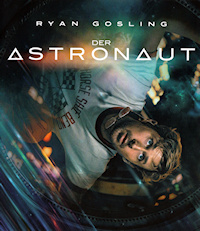
|
Title | Project Hail Mary (Der Astronaut) | ||
| Studio | MGM / Amazon Studios (2026) | |||
| Released by | MGM / Plaion (2026) | |||
| Disc Type | BD-50 (42,4 GB) | Bitrate | ø 30 max. 40 | |
| Runtime | 156:31 Minutes | Chapter | 24 | |
| Region | B (Germany) | Case | Amaray | |
| Format | HD 1080p24 AVC | |||
| Image | 1.78:1 / 2.39:1 | 16:9 |  |
|
| Sound |  Atmos True HD Atmos True HD  English English  German, Italian, Spanish, Japanese German, Italian, Spanish, Japanese  Commentary Commentary |
|||
| Subtitles | English, German Italian, Spanish, Japanese | |||
| Rating | FSK 12 | |||
| Extras | • Audiokommentar von den Regisseuren Phil Lord und Christopher Miller • Geschnittene Szenen • Der liebste Eridianer der Erde |
|||
|
A lone astronaut wakes up in a big spaceship after a long hibernation. At first, he does not know who he is or why he is there. Gradually he begins to remember – he is Ryland Grace, the only survivor on a mission to a far away solar system to find our why Earth’s sun is dimming rapidly. At first he thinks he is all alone but then another spaceship joins him at his destination… Andy Weir literally struck gold in the early 2010s with his unlikely story of an astronaut accidentally marooned on Mars. It took a while for The Martian to get popular but after its first free publishing on Weir’s website the novel became a surprise hit and was successfully made into a movie by none other than Ridley Scott with Matt Damon in the title role. Could Weir do it again with a follow up? Not immediately, as it turned out. Weir’s second book Artemis, a hard science fiction story about Jazz, a smuggler in the titular first lunar city who is entangled in a high-stakes heist, was far away from the more realistic Martian. While quite a bestseller, it failed to catch on like its predecessor. The movie rights were sold to 20th Century Fox even before the book was published but remained in development hell. Phil Lord and Chris Miller, fresh off their successful attempt to turn a marketing junket into a satirical animated farce with The Lego Movie, were attached as directors but never got very far. Meanwhile Andy Weir was busy going back to his roots by writing a new story with fewer characters but with an even broader scope than Artemis. A story about Earth’s demise by a rapidly cooling sun partly came from an earlier attempt of creating a new story but the lone astronaut on the way to save the planet while also making contact with an alien life form was new – hard science fiction indeed. Some parallels to The Martian, especially the Robinsonade-esque setting, lots of scientific problem-solving and the return of the humour that was lacking in its predecessor helped to make the book a much more relatable story, it was still more science-fiction than its predecessor but not completely implausible. When Project Hail Mary was released in 2021, skepticism abounded but even the hardest critics could not find a lot of faults in the novel. Especially the audiobook, narrated by the amazing Ray Porter, brought even more life into the story. Again, the movie rights were sold before the book’s publication, this time it was snapped up by Metro-Goldwyn-Mayer. What could go wrong? Actually, not a lot, except the 2022 sale of MGM to Amazon. It did not mean development hell, but still a longer delay. Meanwhile, there was a curious parallel development going on. In 2017, the Czech-American author Jaroslav Kalfař had published The Spaceman of Bohemia, a relatively unknown psychological science-fiction drama that also involved a lone astronaut meeting a multi-legged alien in space. Apart from this premise, there were absolutely no similarities to Andy Weir’s story which came out four years later. Nevertheless, Netflix must have heard about the film deal between MGM and Andy Weir in 2020 and quickly greenlit an adaptation of Kalfař’s book. The low-budget production with Adam Sandler as the disheveled bohemian astronaut was released in 2024 but mostly garnered negative reviews and failed to make much of a splash. If it was designed to steal Project Hail Mary’s spotlight, it completely failed. Project Hail Mary remained greenlit among the chaos that surrounded the studio after its sale to Amazon. with Phil Lord and Christopher Miller on board, despite their infamous firing from Solo: A Star Wars Story in 2017. They had not directed a movie since that incident, but were busy producing and writing several projects. Originally, they wanted to write the screenplay for Project Hail Mary as well, but they were busy with their second animated Spider-Man movie Across the Spider-Verse. This time Andy Weir still tells his story partly on Earth and in space – but with the huge difference that the Earth-bound story happens in the past and is told in Flashbacks due to the main character’s amnesia. This allows the story to gradually introduce him to the readers, which takes up a considerable part of the plot. Like its predecessor, the book is still written from a first person perspective, but as a narrative instead of a diary. A lot of careful decisions had to be made to condense the book into a workable script. Lots of science had unfortunately to be jettisoned, especially the extended explanations of the petrova line and astrophage were reduced into very short sequences to give the main story more time. This also resulted in considerably less apocalyptic drama because the results of the dimming sun were heavily reduced in the movie. This was a good decision that allowed the movie to be more positive and hopeful instead of relying on constant doom, mostly thanks to the humorous style of the directors. Like the different versions of Douglas Adams’ Hitchhiker’s Guide to the Galaxy, the movie incarnation of Project Hail Mary exists as a separate entity from the book. It’s not just a straight adaptation of Andy Weir’s novel, but an independent version of the story that does not have to incorporate everything from the book. Nevertheless, Drew Goddard and Andy Weir took great care to keep the story and the characters successfully intact. The biggest question in adapting Project Hail Mary to the big screen was, of course, casting the lead role. The obvious and maybe lazy choice would have been Matt Damon, but he was already busy preparing to star in Christopher Nolan’s epic adaptation of Homer’s Odyssey. It also would have made Project Hail Mary into The Martian II and while Damon would have been amazing as Ryland Grace if he had not been Mark Watney before. It was author Andy Weir himself who made the proactive move to send his manuscript to his choice of actor long before the movie got started. It was Ryan Gosling, the Canadian actor who had started his career in television in the 1990s and had since graduated to major Hollywood productions in all sorts of genres from dramas, action, comedy and even musicals. He had shared the screen with Harrison Ford in Denis Villeneuve’s Blade Runner 2049 and even played Neil Armstrong in the successful 2018 biopic First Man. Fortunately, Ryan Gosling was so enthusiastic about the novel that he not only agreed to play the main character but also had a hand in securing the movie rights. Together with Andy Weir, Phil Lord and Chris Miller and Drew Goddard he helped to bring Project Hail Mary to life in front and behind the camera. Playing the disillusioned ex-scientist, teacher and reluctant astronaut on two different levels was not easy but Gosling accomplished it surprisingly well. Ryland Grace came naturally to the actor, walking a fine line between portraying a hero, a coward and a clown. Comedy is a necessary ingredient of Project Hail Mary and the actor had a lot of fun creating his character’s mannerisms with some well-timed physical comedy that was already hinted at in the book. It’s not all fun and games though, because the story does get dramatic and sad in several places and Ryan Gosling easily masters even those rare scenes. Overall, Gosling is a huge surprise and will even convince viewers who do not particularly like him in other movies. Compared to The Martian, Project Hail Mary has a relatively short cast list but one other major character had to be cast very carefully. Project leader Eva Stratt has a much lengthier appearance in the book and while her part was necessarily smaller in the movie adaptation, she still is the key character in the flashbacks. The part needed someone special and Phil Lord and Christopher Miller found her in the busy German actress Sandra Hüller, who had started her career in the theatre but had also branched into movies and television since the mid-2000s. Slightly older than Ryan Gosling, she embodies the strict authority figure of the story to perfection – although compared to the book, her character was made less severe and menacing but she is still the main antagonist of the story. Sandra Hüller does her best with her relatively short appearance, but despite a few powerful and memorable moments the script does her character a disservice by criminally underutilizing her. And then, of course, there’s Rocky. The silicon-based alien is actually the main reason for the whole story of Project Hail Mary because without him, it would simply be boring. The concept of a non-humanoid alien from a strange world utterly different from Earth is nothing new but has rarely been successfully attempted in mainstream science fiction. Andy Weir pulled it off surprisingly well by making Rocky inherently friendly with the same predicaments as his human friend but still with many physical differences that the two characters have to overcome to work together. In the book, Rocky’s first interaction with Grace takes up a considerable amount of the story and is a delight to read, but for the movie, especially the inaugural language learning phase had to be condensed a lot. It still takes about an hour until the movie reaches that point, but the rest of the story concentrates mainly on Rocky and Grace with the flashbacks taking a lesser role. Language was still incorporated into the plot as a major source of humour with Rocky talking to Grace through speech-to-text that basically turns into a Star Trek-like universal translator as the plot goes along. The alien whalesong-like sound language that was so well represented in the audiobook was elaborately created by sound designers Ethan Van der Ryn and Erik Aadahl, but sadly isn’t heard nearly long enough in the movie. Designing the spider-like stone creature could have gone terribly wrong, but the filmmakers made the unusual decision not to create the friendly alien exclusively as a computer-generated creature. To accomplish this, they turned to puppeteer James Ortiz and creature designer Neil Scanlan, who worked together from early design concepts to create the very special alien that could appear on set together with Ryan Gosling. Scanlan had started his career in the early 1980s in England working as a stop-motion animator and became involved with Jim Henson’s creature workshop, later even heading the creature and makeup department for the third batch of Star Wars movies. The always busy designer was paired with the still relatively young James Ortiz, who had mainly worked in theater before designing and performing his own puppets. They both jointly created not only Rocky’s appearance, but also his movements and mannerisms that were only superficially mentioned in the book. Part of Rocky’s appearance still had to be created with CGI and a lot of digital cleanup was necessary to remove the puppeteer from the filmed image, but he still appears to be absolutely real. The five-limbed rock is not inanimate at all and a lot of fun to watch, as lots of small details from the book have been incorporated into his intricate design. The combination of puppeteering, animatronics and computer graphics is so successful that it looks absolutely seamless and utterly charming. Rocky is not the nightmare monster he could have been – he is cute, playful and maybe the most creatively designed aliens in film history. Rocky’s voice was provided by James Ortiz on the set but originally the filmmakers planned to replace him with another more prominent voice actor. Hearing his temporary tracks made them reconsider and Ortiz was brought back in post-production to re-record his dialogue – an amazing decision that makes Rocky come alive even more. Even though Ray Porter created Rocky’s Voice magnificently in the audiobook, James Ortiz really IS Rocky even though he is only supposed to be a speech synthesizer. With Grace, Rocky and Stratt in the lead the other actors in the movie almost seem insignificant. This is the only major failing of Project Hail Mary, but a necessary one – another hour of runtime could have been devoted to the flashbacks, but that would have really strained the length of the movie. Only Lionel Boyce as the security guard Carl assigned to Grace in the early flashback sequences makes a bigger, very funny appearance but all other actors only appear in fleeting glimpses. Ken Leung, Milana Vayntrub and Malachi Kirby as the original crew are excellent but sadly do not have much to do in the movie. For the camera work, Phil Lord and Chris Miller turned to a new collaborator in Australian cinematographer Greig Fraser. With lots of impressive big-budget productions like Dune and The Batman and even two academy awards under his belt, he was perfect for Project Hail Mary, even though the filmmakers did not have a shiny, perfect science-fiction look in their mind at all. While The Martian was produced in 3D ten years ago, Project Hail Mary went into a completely different direction. Early in the pre-production, a cooperation with IMAX was forged to bring the movie to the biggest screens possible in the world. By shooting with digital Arri Alexa 65 cameras and special anamorphic lenses that stretched the image vertically instead of horizontally to create the 1.43:1 aspect ratio, both digital projection and analog film prints in 70mm 8-perf horizontal IMAX and other large formats were possible. The film-out process Greig Fraser had already used on the Dune movies was successfully utilized here again, giving Project Hail Mary a beautiful organic look. The directors and the cinematographer had also made the risky decision to shoot for several target formats and also split the movie between a more traditional 2.40:1 scope presentation for the flashback sequences and a full IMAX frame for the “present day” parts that could be cropped to 2:1 or 16:9. Changing aspect ratios were unthinkable only ten years earlier but the new rivalry between television and cinema made it inevitable as a stylistic decision. Project Hail Mary’s unique presentation was not result of the two different aspect ratios but also of an unusual colour timing. While the flashback sequences were grey and almost monochrome, the rest of the movie looked warm, friendly and amazingly colourful, a result of the film-out process that used two different Kodak film stocks. Especially the sometimes claustrophobic scenes inside the Hail Mary and the wonderful space sequences benefited a lot from this technology. For the production design, Phil Lord and Chris Miller hired veteran designer Charles Wood, who had started his career in the early 1990s and had since then worked on a lot of big budget science fiction and fantasy productions, some of them in the Marvel universe. The biggest challenge was, once again, to design a realistic space ship of the near future. The Hail Mary needed a less perfect and polished look than The Martian’s Hermes because it is supposed to be engineered together in a hurry. To achieve this, Wood again enlisted the help of NASA by visiting JPL and the Kennedy Space Center for inspiration – with great success. Instead of relying on greenscreens and digital backgrounds, the spaceship interiors were almost completely built as a lifesize set for Grace and Rocky to romp through. Mostly it does not even look remotely like a proper spaceship, but a submarine, underlining the slapdash way the ship is supposed to be cobbled together. The circular wall-to-wall cockpit also looks fascinating and not too futuristic. While the filmmakers had avoided using greenscreens at all cost and only used CGI to remove the puppeteers and other necessary elements, computer graphics were still necessary to create the space scenes. Five different effects houses, among them ILM, Framestore and Sony Imageworks, worked on the movie to create over 2000 shots. The Hail Mary and Rocky’s ship could have been traditional models, but for entirely practical and also financial reasons the filmmakers did not quite go that far. The visual effects are, however, absolutely spectacular and everything you would expect from a movie like Project Hail Mary. Two unique spaceships who even perform a delicate dance synching up their rotations in a lovely homage to Kubrick’s 2001 – only set to a tango instead of a waltz – are just one of the beautiful highlights of the movie. There are also some breathtaking action sequences in the second half of the story with amazing spacewalking and seat-of-your-pants flying that keep the viewers on edge. While Phil Lord and Chris Miller had relied on Devo founder Mark Mothersbaugh in the past for a lot of movies, this time they enlisted British composer Daniel Pemberton, who had already worked on the animated Spider-Man movies so he was not entirely unknown to the filmmakers. His approach for Project Hail Mary was absolutely astonishing and not even remotely comparable to traditional science-fiction scores. With a heavily rhythm-based approach incorporating many unusual percussive instruments but also featuring a full orchestra and even a big chorus, Pemberton knows how to set the mood perfectly. Even though the movie is not particularly religious despite its title, Pemberton has incorporated the Gregorian Dies Irae choral chant as a central theme into the soundtrack. This is something many film composers going back to the 1920s have done before, but rarely in such an amazing way. The descending notes of the Dies Irae are not exclusively a death chant but also a more hopeful request for grace and this is the way Daniel Pemberton uses them in many important moments of the movie, setting the melody in both minor and major keys. His score makes Project Hail Mary come to life in a wholly unexpectedly wondrous way. In addition to Pemberton’s amazing score, Project Hail Mary also features more than a handful of songs, some of them just briefly and others much more prominently. Harry Styles’ Sign of the Times, which was heavily featured in the promotional campaign, is actually not in the movie in its original version, but instead a Karaoke bit sung by Eva Stratt – something Sandra Hüller actually chose herself. Other songs included show a distinct whimsical taste by the filmmakers, including musicians like Miriam Makeba, Kris Kristofferson, Dennis Wilson, Neil Diamond, and Ike and Tina Turner. Later in the movie, the filmmakers also pulled off one of the great stunts of music licensing: including a Beatles song! Two of Us represents the four probes named after the band members in a perfect moment in the final moments of the movie. Reportedly another Beatles song, possibly Don’t let me Down, was also cleared for the movie but ultimately not used. The first assembly cut made by editor Joel Negron was reportedly around six hours long, which would have been enough for a whole television miniseries – but since Project Hail Mary was supposed to be a single movie there was a lot of painful editing in post-production. The first time the movie was shown to test audiences it was still almost four hours long. An early script that was leaked on the internet showed considerable differences to the finished movie, which turned out to be 155 minutes – even longer than the extended version of The Martian. The first enigmatic preview trailer of Project Hail Mary was released at the end of June 2025, which launched a huge marketing campaign that reached its heights with a multitude of new trailers and filmclips posted on social media starting around Christmas. The premiere was held in London on March 9 with the worldwide releases in cinemas following on March 19 and 20 in lots of different formats. While only 16 prints in 15-perf 70mm IMAX were made and most of those didn’t make it out of North America, more analog prints in “smaller” 70mm 5-perf and even 35mm prints were made in addition to the digital masters. Even though the different formats initially caused some confusion, Project Hail Mary turned into one of the biggest movies of the year with a worldwide boxoffice of over $600 million. Even most critics were very happy with the movie as a prime example of intelligent, good-natured science fiction and only few dismissed it as too generic, boring and a cash cow for Amazon. Overall, Project Hail Mary is successful as both an adaptation and a science-fiction movie in its own right. While Grace and Rocky are the heart and soul of the story, they are not stealing the show completely and are part of an amazing space opera that is a worthy successor to Ridley Scott’s The Martian. Phil Lord and Christopher Miller as directors were a great choice that perfectly matched the quirky humour of Andy Weir and Ryan Gosling turned out to be the perfect choice for Ryland Grace. Even the involvement of Amazon as the new owners of MGM could not ruin this movie.
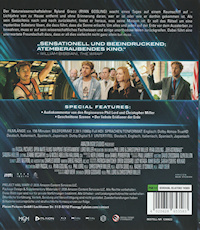
Project Hail Mary was first released in cinemas on March 19th and it took less than two Months until it was available to buy on Amazon Prime as a digital stream on May 12th with a MGM+ channel release on June 18th – and on July 3 it was added on Amazon Prime for free. It was by no means certain at this point that a physical disc release would even be coming, but it finally did in late August. The German Blu-Ray and 4K UHD discs were released by Plaion Pictures because Amazon does not seem to have a physical media distributor in Germany anymore. While manufactured in Germany, it seems to be an international master that even has English-language menus. While the disc has an amazing image and sound quality, the extras are only comprised of a director’s audio commentary, ten minutes of deleted scenes and one short featurette – which is disappointing considering there must be a wealth of unseen material. Someday there will probably be a better edition with more extras, but nothing specific has been announced yet except a nebulous mention of a 3-disc-boxset that is supposed to contain a full-format 1.43:1 IMAX edition in addition to more extras. |
  |
|||
|
The video master used for the first Blu-Ray and presumably also 4K UHD releases of Project Hail Mary seems to be the version that was treated with the film-out process, making this a scan of a 70mm 5-perf IMAX print. The quality is nothing short of amazing with the added bonus of the warmth of an analog film stock. The aspect ratio on this master is a full 16:9 frame for the scenes in the “present”, presumably cropped from the 1.43:1 IMAX ratio and 2.39:1 for the flashback sequences. Showing the full 1.43:1 image would have been interesting, but an 1.78:1 crop is more sensible because that way no windowboxing for the non-flashback scenes is necessary. There is a bit in the deleted scenes where the “wide” scenes are cropped to only 2:1 and maybe an unified 2:1 aspect ratio would have been better, but the compositions look great in this way too. While the streaming version suffered somewhat from compression artifacts, the Blu-Ray has the advantage of a high bitrate that almost tops out at 40 mbit/s, delivering a very clean image. This is especially important for the proper reproduction of the film grain that is moderately visible in the 1.78:1 sequences, but as chosen by the filmmakers is hardly visible in the 2.39:1 shots. Comparing the main movie with the deleted scenes that were not treated with the film-out process reveals that the analog film makes the image look considerably more alive and organic while the deleted scenes look much more lifeless and digital. The re-transfering of the film-out source has, of course, not left any visible problems – there are no scratches or dust visible anywhere, but it would have been funny to include some workprint-like scenes at the end of the movie to show how spoiled we are today by digital technology. Even the sharpness is absolutely excellent without resorting to any digital filtering. The colours are reproduced brilliantly as well. Like the film grain, they look radically different in the two “timezones” of the movie: while the “present” looks warm and friendly and often spectacular in the space scenes, the flashbacks are deliberately cold and grey. Even without any HDR enhancement, the colours look like reference material on ordinary HD screens. Nowadays it’s not hard to make a Blu-Ray of a new movie look bad but with the film-out process it still could have gone wrong. Luckily, the Blu-Ray of Project Hail Mary delivers an amazing quality that makes owning the disc worth it. |
||||
|
Project Hail Mary comes with the gold standard of soundtracks, an English Dolby Atmos True HD mix – although the German, Italian, Spanish and Japanese soundtracks are only available in “ordinary” Dolby Digital 5.1. As usual, I have listened only to an analog surround 4.0 downmix but even that sounds amazing. The Blu-Ray features a pleasant, not too loud or forceful sound mix that is almost traditional in creating its surround sound mainly with Daniel Pemberton’s all-encompassing music but also has some very intricate sound design to offer. That includes an almost strict silence in all space sequences except music and voices, but also very detailed and realistic ambient noises inside the spaceships. The voices are mostly anchored to the center channel but occasionally veer off to the sides, although never in a distracting way. Direct surround effects are surprisingly rare but when they appear they are well placed. The German soundtrack seems to be largely identical to the English original, but the voices, as usual for a dub, sound much more artificial even in the case of Rocky. There are subtitles available in all of the soundtracks’ languages. |
||||
|
Compared to the full-to-the-brim extended edition of The Martian, the first (and hopefully not only) Blu-Ray release of Project Hail Mary is a big disappointment in the extras department, especially considering the big success of the movie. The disc even starts without a company logo and a static menu. The Audio Commentary with Directors Phil Lord and Christopher Miller was originally recorded for the TheaterEars app to be listened to in the cinema, but it works equally well at home from the discs. While Andy Weir has sadly not joined in, the filmmakers fully make up for the absence of the author and keep up the pace very well. It’s not really a technical commentary, because the filmmakers like to focus on the human aspect of making their movie, talking more about the people working with them than about themselves. It’s a very fun and entertaining commentary that is worth watching the movie twice. The Deleted Scenes (9:58) consist of the five sequences Day 1 Food paste, I think I’m handling things pretty awesome, How to put on a spacesuit, You Sleep I watch and Maybe we’re cousins. While it’s disappointing that there is only ten minutes of material with a reportedly long cut of three and a half hours, those are very funny scenes that would have perfectly fit back into the movie. There is sadly no long-form documentary at all, just the short Earth’s Favorite Eridian (7:53) featurette that has already been shown on Youtube and other platforms during the movie’s promotional campaign. |
||||


 The Movie
 The Disc
 Bonus Materials