 2001: A Space Odyssey 2001: A Space Odyssey |
||||
|
Title | 2001: A Space Odyssey | ||
| Studio | MGM (1968) | |||
| Released by | Warner Home Video (2018) | |||
| Disc Type | BD-50 (42.8 GB) & BD-25 (9.55 GB) | Bitrate | ø 35 max. 40 | |
| Runtime | 148:51 Minuten | Chapter | 35 | |
| Region | ABC (Germany) | Case | Elite | |
| Format | HD 1080p24 AVC | |||
| Image | 2.20:1 | 16:9 |  |
|
| Sound |  HD-Master HD-Master  English Remixed, English Theatrical English Remixed, English Theatrical German, Italian, Spanish (Castellano), Spanish (Latino) German, Italian, Spanish (Castellano), Spanish (Latino)  Portugese, Polish, English Audio Description, Audio Commentary Portugese, Polish, English Audio Description, Audio Commentary |
|||
| Subtitles | English, German, French, Spanish, Portugese, Dutch, Danish, Swedish, Norwegian, Finnish, Icelandic, Polish, Turkish, Croatian, Rumanian, Hebrew, Czech, Hungarian, Russian, Greek, Arabic, Chinese, Korean, Thai | |||
| Rating | FSK 12 | |||
| Extras | • Audio Commentary by Keir Dullea and Gary Lockwood • Channel 4 Documentary 2001: The Making of a Myth • Standing on the Shoulders of Stanley Kubrick: The Legacy of 2001 • Visions of a Future passed: The Prophecy of 2001 • A Look Behind the Future • What is out there? • 2001: FX and Early Conceptual Artwork • “Look: Stanley Kubrick!” • Bonus Interview with Stanley Kubruch from 1966 • US Theatrical Trailer |
|||
|
In the year 2001, a strange monolith is found on the moon. When it is excavated, it sends a strong signal into the solar system and the Jupiter Mission starts with the space ship Discovery to investigate the signal…
Sophisticated science fiction films were rare in the cinematic landscape of the 1950s and 1960s. Apart from exceptional productions like Forbidden Planet or The Day the Earth Stood Still, most of the movies of this kind were nothing more than third-rate horror stories with a space theme. The mass audience liked it, but serious film lovers and filmmakers were not very enthusiastic about this trend because the artistic side was somewhat neglected. Many filmmakers did not want to get their hands dirty with the genre, which had almost fallen into disrepute. One director in particular was opposed to this development: Stanley Kubrick, who had just finished his brilliant anti-war satire Dr. Strangelove or How I Learned To Stop Worrying And Love The Bomb and was looking for a new project. The idiosyncratic filmmaker had been considering the possibility of extraterrestrial life for some time and was disappointed that no one had ever tried to make a halfway serious film about the subject. Kubrick was determined to do just that, and was now looking for a collaborator, as he didn’t dare enter what was for him a completely new genre all by himself. An employee at Columbia Pictures eventually gave Stanley Kubrick the tip to contact author Arthur C. Clarke, who had been writing sophisticated science fiction stories since the early 1950s. Clarke was enthusiastic about Kubrick’s idea and immediately began looking for suitable material from his own library before he even set off for England. Clarke found his 1948 short story The Sentinel about the discovery of a mysterious artifact on the moon that sends signals into space to be a particularly fitting starting point for collaborating with the director. Stanley Kubrick had also read up on the science fiction genre in detail and was well prepared when he met Arthur Clarke in New York in the spring of 1964. At first, Kubrick was not enthusiastic about Clarke’s short story, but eventually both were able to agree on The Sentinel as a starting point. Clarke also provided five other short stories as material, but these remained more or less unused. Originally the story was to be written in book form first and the screenplay developed from it, but this proved extremely difficult and in the end both were written almost simultaneously. For the rest of 1964 Stanley Kubrick and Arthur Clarke were busy turning their ideas into written words, although progress was slow. By the end of the year only a rough draft of about three quarters of the story was ready under not entirely serious working titles like as How The Solar System Was Won. Neither Kubrick nor Clarke had any idea how the plot should continue. For Stanley Kubrick, the material, which had been laboriously developed in many discussions and writing sessions, was still good enough to start looking for a film studio willing to take on such a daring project. It was no easy undertaking because science fiction was still considered box office poison in the mid-1960s. Stanley Kubrick nevertheless managed to find support in Hollywood, even though no film studio was doing particularly well at the time. The director was able to win over not only Metro-Goldwyn-Mayer for his idea, but also the Cinerama company, which enabled Kubrick to reach a special agreement that secured the screening on the huge curved Cinerama screens and the use of a large-format film format. MGM had not made a big name for itself with science fiction films, but was nevertheless a pioneer in this field – in 1956 the studio had produced one of the few serious films of the genre with Forbidden Planet, but after that it hardly devoted itself to the subject at all. With Stanley Kubrick’s project, MGM had ventured into a science fiction film again almost ten years later, but when the director made the first official announcement in February 1965 under the title Journey to the Stars, the studio had no idea what it had gotten itself into. With the studio’s support, Stanley Kubrick hired a whole host of designers, animators and consultants to begin designing the film – a process in which he was closely involved at every stage. Meanwhile, Arthur Clarke continued to work on the story, which Kubrick had also begun to turn into a screenplay. In the summer of that year, Stanley Kubrick and Arthur Clarke met again after a short break in England, where preparations really began in August at MGM’s Borehamwood studios. Although the studio did not think it was a good idea, Stanley Kubrick, who had been given complete freedom by MGM, did not choose any big stars. Only relatively unknown actors were selected so the other elements of the film were not overshadowed. Nevertheless, Kubrick put a lot of effort into selecting the cast and found excellent actors, particularly for the two main roles. Keir Dullea had just appeared in Otto Preminger’s psychological thriller Bunny Lake Is Missing when Stanley Kubrick noticed him and cast him in one of the most important roles in the film, astronaut Dave Bowman. For Bowman’s partner Frank Poole, the director found Gary Lockwood, a busy film and television actor who had guest-starred in Gene Roddenberry’s second Star Trek pilot film in the summer of 1965. It seemed as if Kubrick had chosen the two actors for their lack of expression, but in fact there was more to the astronauts’ characters than just a completely emotionless demeanor. In the absence of longer dialogues, the actors had to work mainly with facial expressions and body language, something which Keir Dullea in particular succeeded doing perfectly in the second part of the film. The only other human character of importance to the plot was Dr. Heywood Floyd, whom the story follows on his way to the site of the monolith on the moon. For this role, which was mainly responsible for exposition in the first half of the film, Stanley Kubrick had hired William Sylvester – an actor who had previously only appeared in supporting roles in B-movies and TV movies, but who played the space official in just the right dry way, while also being one of the few truly human characters in the story. Other small supporting roles were played by Leonard Rossiter as Dr. Floyd’s Russian acquaintance and Ed Bishop as the lunar shuttle captain. One of the film’s biggest trademarks was the supercomputer HAL, which was responsible for the real dilemma of the plot. It does not even appear in humanoid form, but only in the shape of monitors, ghostly red camera lenses and an eerie, monotone voice. Stanley Kubrick initially hired British actor Nigel Davenport for the role, but he found his accent too irritating. Martin Balsam was hired afterwards, but also did not speak emotionlessly enough for the director. The director only found the ideal voice for HAL much later in Canadian actor Douglas Rain: cool, somewhat mechanical and completely emotionless, yet still somehow likeable. Douglas Rain’s part was recorded long after filming had finished, so HAL’s final voice never came into contact with the other actors and was never heard by them on set. In the first act of the movie, the ape-men actors almost fell into the category of acrobats rather than actors. They acted so amazingly realistically under the masks elaborately designed by Stuart Freeborn that they could be mistaken for real animals. Although the apes are not much characterized much in the movie, mime artist Daniel Richter is clearly in the foreground in the role of the Moonwatcher, who is only named the script and in the book. He was also responsible for the elaborate choreography of the herd of apes. Real monkeys were studied extensively in zoos and in film footage shot by Stanley Kubrick in order to make the movements of the human actors as realistic as possible. Stanley Kubrick and Arthur C. Clarke’s story had a surprisingly simple plot, but it was told in extreme detail. Structured in three episodes that were only connected by a single thread, the two authors had expanded the original short story The Sentinel into a full-blown epic without relying on kitschy pathos or flag-waving patriotism. The arrival of the monolith on Earth was staged as a documentary-like look into the prehistoric past of mankind, while the discovery of the second monolith on the moon was used to portray space travel in the near future with awe and admiration. Discovery’s journey to Jupiter ultimately became almost a theatrical play with the most amazing backdrop – a duel between man and technology, culminating in a fantastic journey and the transformation of the protagonist. Kubrick’s very first idea of making a film about the relationship between mankind and the universe was implemented very well – instead of developing a straightforward science fiction story, Stanley Kubrick and Arthur C. Clarke came up with a multi-layered narrative that was not only intended as a technically playful vision of the future, but also as a humanistic drama about the development of mankind. The contact with extraterrestrial intelligence, which was highly sensationalized in other films, was pushed completely into the background because Kubrick wanted to distance himself as far as possible from the cliché of the little green men. While Clarke’s novel was very talkative, Stanley Kubrick left the thinking to the audience in the movie and created a lot of room for interpretation by reducing the extensive dialogue and voiceovers of the early versions of the script to an absolute minimum in the finished film version. The filming took place exclusively in England and, with one small exception, entirely in film studios. Under great time pressure, Stanley Kubrick began filming on the gigantic moon excavation set at the Shepperton Studios in late December 1965 and only had a week to complete the scenes because the sets had to be dismantled afterwards. At the beginning of 1966, work continued at the Borehamwood Studios, where work had already been going on for months on the elaborate sets for the interior shots. This is where the huge centrifuge was used, which was built in full size for a considerable part of the budget by Vickers Aircraft to realise the idea of Kubrick’s gravity simulator in the Discovery. It was one of the most impressive technical achievements in British film history, even eclipsing Ken Adams’ gigantic crater set for the Bond film You Only Live Twice, which was also in production at the time. Kubrick shot for weeks with Keir Dullea and Gary Lockwood in this gigantic set, which achieved the illusion of the large gravity flywheel in an astonishingly simple but at the same time enormously complex way. The weightless scenes on the moon shuttle were also achieved in a similar way with rotating sets – something that no other film had attempted in such detail until the age of computer animation. The interior shots on the spaceships actually only consisted of a small handful of sets, but these were still elaborately built. The team of production designers consisted not only of people with industry experience such as Anthony Masters and Ernest Archer, but also of NASA consultants Fred Ordway and Harry Lange, who paid attention to scientific plausibility and ensured that the sets and models were not purely fantasy products, but rather very real creations based on the current state of space travel. With one exception, the scenes of the prehistoric Earth were also shot entirely in the studio. Stanley Kubrick, who was not very fond of traveling, had a team of photographers in Africa create background images. Those that were not integrated into the film with blue screens as was then usual, but were shot in-camera with a completely new front projection technique without any additional film printing steps. This made the scenes look as if they had been shot on location, even though they were filmed under controlled conditions in the British film studios. Kubrick and Clarke had planned their film from the beginning to be extremely effects-intensive and were aware that just a few model shots would not be enough – after all, the majority of the film was to consist of them. Since there were no companies specializing in film effects in the 1960s, Stanley Kubrick had to put together a team himself. Among them were Wally Veevers, with whom the director had already worked on Dr. Strangelove, Douglas Trumbull and Con Pederson, who had caught Kubrick’s attention through the film To the Moon and Beyond for the 1964 World’s Fair, and Tom Howard, an MGM veteran who had been shooting all kinds of effects for the studio since the early 1940s. Veevers, Trumbull, Pederson and Howard were just four creative minds in a huge team led by Stanley Kubrick himself – as a former photographer, he did not leave the effects to the experts like many other filmmakers, but worked closely with them and made sure that the team lacked nothing. With a budget of millions for the special effects, space stations, spaceships and a complete moon base were created that were more detailed than any other models in film history. The design was not primarily based on futuristic aesthetics, but on a realistic design, which made the models look less like science fiction than real space travel. All effects were recorded directly on the film negative, often with dozens of exposures, in order to achieve the best possible image quality on the 65mm material. While the model shots were achieved using relatively traditional means, Stanley Kubrick and his team had to develop completely new techniques for the last act of the movie. David Bowman’s journey through the monolith’s stargate was an empty spot in Stanley Kubrick and Arthur C. Clarke’s story, which they were only able to fill in at the last minute, long after filming had begun. Clarke had described the “trip” in detail in the book version, but the visual design was still completely unknown until special effects technician Douglas Trumbull developed the slit-scan technique. A complex photographic process made it possible to create fascinating images that no filmmaker had ever brought to the screen before. The slit-scan shots were supplemented with color-altered landscape shots and artistically flowing black paint dabs that appeared to be almost realistic cosmic explosions – all of this had an almost electrifying effect on the cinema audience of the time, who had never seen anything like it before. Stanley Kubrick had originally planned a completely new orchestral film score for 2001: A Space Odyssey and had turned to Carl Orff, among others, whose Carmina Burana he had liked very much. When the composer canceled because of his advanced age, Kubrick hired British film composer Frank Cordell, who was to score the film based on Gustav Mahler’s Third Symphony, but this was also quickly abandoned. Alex North, who had already worked with Stanley Kubrick on Spartacus, was commissioned to write the film score only until very late in 1967, and half of it was recorded just four months before the planned film premiere. In the meantime, Stanley Kubrick had used various classical pieces as temporary music during the film editing, which he liked more and more and eventually replaced the originally planned music by Alex North. To his great disappointment, the composer only found out about this at a test screening shortly before the premiere. But with this decision, Stanley Kubrick had created a classic of the highest order, which married classical music to his film and made them his greatest trademark. The beginning of Richard Strauss’ Also Sprach Zarathustra as the title music and leitmotif in the key scenes was an excellent choice and also had a highly symbolic character, which goes back to the musical setting of the sunrise in Friedrich Nietzsche’s work. Less symbolic than simply musically beautiful was the choice of Johann Strauss’s Blue Danube Waltz as accompaniment for the first space sequence, in which the space shuttle and space station perform a dance in Earth’s orbit in time to the music. Stanley Kubrick also chose several works by György Ligeti together with Also Sprach Zarathustra to achieve the mysterious mood of some scenes, whose musical accompaniment appears somewhat more atonal but no less fascinating. Aram Khachaturian’s Adagio from the Gayane Ballet Suite sounds more melodic and very successfully expresses the loneliness of space in the first scene of the Jupiter journey. The music was not re-recorded, but the same recordings that the director had already selected for the rough cut were used. There was nothing left to improve, especially on the definitive recordings of the Blue Danube Waltz and Also Sprach Zarathustra, conducted by Herbert von Karajan. Most of the recordings came from the Deutsche Grammophon company, which recognized that Kubrick’s film was not a cheap science fiction spectacle, but a sophisticated production and wanted to be associated with it – in contrast to Decca, who provided its recording of Also Sprach Zarathustra but did not want to be named in the credits. The post-production of 2001: A Space Odyssey was so complex and took so long that the cinema premiere had to be postponed again and again, much to the displeasure of the studio. After more than two years of work, Stanley Kubrick finally completed his film in early 1968, and the cinema premiere finally took place on April 2nd of that year in the legendary Uptown Theater in Washington on a large Cinerama screen. Five days after the premiere before the film was released across the USA, Stanley Kubrick took one last step and shortened the film by almost twenty minutes – including a longer opening sequence in which scientists discuss extraterrestrial life, more scenes on the space station, and longer spacewalks by Bowman and Poole. Despite the last-minute changes, reactions were initially mixed. Even at a test screening for the studio heads of MGM, many people left the theater early in frustration and predicted that Stanley Kubrick’s movie would be a huge flop. Some critics were completely enthusiastic about Kubrick’s vision of the future, others found the film boring and childish – but most recognized Stanley Kubrick’s intentions and celebrated 2001 as a successful artistic masterpiece. The film was, however, not a major financial success at first. It took some time until a younger audience discovered the film as a psychedelic trip and, through massive word-of-mouth propaganda, finally filled the box office. Stanley Kubrick and Arthur C. Clarke had hoped that their film would be a success, but they had not expected that the ending, which was actually more of a makeshift solution, would lead to it. The film was nominated for four Oscars – screenplay, direction, design and effects – but only won the latter category, which was also due to strong competition at the 1969 Academy Awards. When Stanley Kubrick and Arthur C. Clarke had started their project in the spring of 1964, American space travel was still in its infancy. The Mercury program had just been completed and while 2001: A Space Odyssey was being created, the most exciting phase of the space program started with the Gemini flights, which paved the way for the Apollo missions and brought the moon landing within realistic reach. From the perspective of that time, 2001: A Space Odyssey offered a completely realistic prediction of the next 35 years, which was still down to earth enough to be more science than fiction – the genre for this film should actually have been renamed Science Future. The year 2001 is now long gone and Stanley Kubrick and Arthur Clarke’s hope that humanity would be contacted by extraterrestrials by then had not come true. The vision of the future was nevertheless quite accurate, even if some ideas were a little too enthusiastic – if the space race had continued at the same pace as in the 1960s, the prediction might have been correct, but back then nobody could have known that the space program would stall after the moon landing. At least the setting of the film is accurate on a small scale: the space shuttle is a reusable, airplane-like space shuttle, a space station is also almost commonplace, but a permanent moon base and manned space flights beyond the moon are still in the future. What really seems to have come true especially in the last few years is the artificial intelligence. Many decades after its creation, 2001: A Space Odyssey has hardly aged and has nor lost much of its significance and impact. Stanley Kubrick and Arthur C. Clarke managed to create a timeless vision of the future that tackled the topic of contact with extraterrestrial beings in a very intelligent way and was far removed from the usual science fiction cliches. Stanley Kubrick’s powerful imagery became a great challenge for the audience, whose intellectual understanding was put to the test – Arthur C. Clarke even said that he and Kubrick would have done something wrong if everyone understood their film immediately. In contrast to the movie, Clarke’s novel and the collection of early novel drafts and Clarke’s own production diaries published in 1972 as The Lost Worlds of 2001 provide enough information to understand the background of the story. Thanks to the many re-releases not only in cinemas, but also on television and many home video releases, 2001: A Space Odyssey had achieved the status of a classic since the 1970s, changing the genre so profoundly that hardly a science fiction production was not influenced by Stanley Kubrick’s masterpiece. While the brilliance of 2001: A Space Odyssey was never really matched again, Arthur C. Clarke wrote the somewhat more conventional sequel 2010: Odyssey Two in 1980 after much hesitation, which was made into a movie three years later by Peter Hyams, closely based on the original. It brought a reunion with Discovery, HAL, and even Dave Bowman and while it was a much more conventional film compared to its predecessor, it still was a great science fiction film. Clarke’s other novel sequels 2061 and 3001, remained in the shadow of their much better predecessors and were never made into movies. 2001: A Space Odyssey is not only one of the best science fiction films to this day, but is rightly regarded by many film historians as one of the greatest movies of all time. Before his sudden death in 1999, Stanley Kubrick had arranged for the film elements of 2001 to be completely restored so that the film could be re-released in theaters for its eponymous anniversary. Stanley Kubrick sadly did not live to see this, but in 2001, audiences all over the world were able to see his greatest masterpiece on the big screen for the first time in a long time… and in January 2001, a mysterious monolith appeared in a park in Seattle, which turned out to be the project of a group of artists, but which nevertheless gave rise to thought – perhaps we are not alone after all?
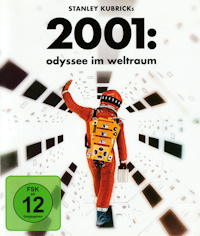
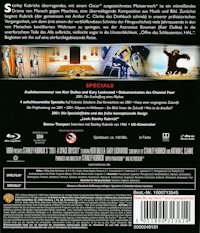
2001: A Space Odyssey has had a very difficult journey on home video. In 1980 it was one of the first films to be released on VHS and for a long time, much to Stanley Kubrick’s annoyance, it had never been shown in its original aspect ratio. This only changed with the various laserdisc releases in the early 1990s, which were the best versions at the time. The first DVD of 2001: A Space Odyssey was released in 1998 by MGM, but was disappointment because only an older laserdisc master was used. A few months after Stanley Kubrick’s unexpected death, Warner released the same DVD again in a different packaging in 1999 as part of a hastily put together Kubrick box set. It was not until the anniversary year of 2001 that Warner finally released a new anamorphic transfer of the freshly restored version of the film on DVD. Despite the much improved image quality and an overhauled soundtrack it was a missed opportunity for many due to the total absence extras. Calls for a better-equipped home video incarnation went unheeded until 2007, when Warner finally released a new special edition in the autumn of that year on DVD and Blu-Ray together with several other Stanley Kubrick titles. It not only contained the long-awaited extras, but also another new transfer with improved quality. For the 50th Anniversary in 2018, 2001: A Space Odyssey was finally transferred directly from the 65mm negative for the first time for 4K and 2K presentations on Blu-Ray, improving the image quality even more. The discs were based on the 2007 editions and no new extras were produced, but the new transfer was certainly worth the upgrade. The Blu-Ray reviewed here is the European 2018 release, which is still the best version next to the simultaneous 4K release. Sadly the discs just come in a standard keepcase without any slipcovers or even a two-sided cover without a German FSK logo. |
   |
|||
|
While Warner had already done two different transfers of 2001: A Space Odyssey for the 2001 and 2007 releases, the 2018 version was again completely re-done for a 4K presentation. For the first time, the film was not transferred from a 35mm reduction print but the original 65mm negative. There was some confusion which source was used for the new transfer because Christopher Nolan had initiated an “un-restoration” simultaneously in 2018 by striking new 70mm prints only with photochemical means, but those were not used for the new Blu-Ray. Instead, Ned Price from Warner’s restoration department and Stanley Kubrick’s long time assistant Leon Vitali transferred the original 65mm negative for the first time and used a 35mm answer print made in 1999 for reference. This new transfer again has a slightly different geometry when closely compared to the previous versions. It looks like the previous versions were a little bit too much horizontally squeezed. The aspect ratio is now the proper 2.20:1 and while the new transfer has a bit less image information at the sides, the geometry looks much better now that it was transferred “flat” from the 65mm negative. The negative has been in fairly good condition and previous restoration efforts have ensured that it is protected as good as possible. A thorough digital cleaning has made sure that there are absolutely no scratches, dust or other damages. The infamous tear in the beginning of the first space sequence which was clearly visible on the very first non-anamorphic DVD and was also noticeable as a slight jerk on the 2001 transfer is now completely gone. The level of detail on this new transfer does not disappoint and the step-up from 35mm reduction print to 65mm negative is distinctly visible. No additional sharpening filter was necessary, the large format film now easily outdoes even the Blu-Ray resolution and should even be enough for the simultaneous 4K UHD release. The imperfections visible in some special effects shots are now somewhat more pronounced, but that is the only drawback. This is a very vivid and three-dimensional image that finally looks like a real film projection. The colour timing has also been overhauled once again and while no big changes were made in comparison to the 2008 transfer, a few improvements were made. Contrast and brightness have been carefully tweaked to optimize especially the black levels. The colours have been dialed back a little bit to compensate for the previously slightly overzealous saturation without making them too weak. The heavy blue shift of the 2001 transfer has completely disappeared, this new version now looks appropriately warm without going into the brownish faded mess of the first 1990s versions. No noise filter seems to have been applied and a faint amount of very fine film grain is still visible that is appropriate for a 65mm source. The image is also remarkably stable except a very slight “swimming” in a few scenes that has always been there. Since the negative was preserved in 8k resolution and digitally restored in 4k, this is probably the last version of 2001: A Space Odyssey that will appear on home video for quite a while – and this Blu-Ray is a great representation of this new version. |
||||
|
2001: A Space Odyssey was already mixed with 70mm 6-track audio back in 1968 so there have always been at least stereo versions of the movie’s audio around. Starting with the first Laserdiscs in the 1990s the first 5.1 mixes appeared and even the first DVD release in the late 90s had a 5.1 soundtrack. For the 2001 release, the whole soundtrack had already been completely restored and remixed. Not only were the 6-track magnetic sound masters used, but the entire soundtrack was remixed from the original sources. For the music, one of the most important components of the soundtrack, the multi-track masters from the original recordings were even tracked down and seamlessly integrated into the new mix in order to achieve the best possible sound quality. The 2008 and 2018 releases are heavily based on the 2001 sound restoration and on the Blu-Ray the new English soundtrack is available in DTS HD Master 5.1 in a slightly improved version. Despite the new 5.1 mix, 2001 is not a big surround spectacle and while it actually has a very spartan sound design, but still offers a very elaborate soundscape. Large parts of the surround sound are carried by the music, which is spread very widely across all channels and is an extremely discrete mix – instead of a mush of sound, you can hear the individual groups of instruments like it should be in a classical music recording. The often very subtle ambient noises are not only spread across the front soundstage, but also make extensive use of the surround channels. The few voices in the film hardly suffer from the thin sound typical of movies of this age, but sound surprisingly warm and realistic. Most of the time the voices are limited to the middle channel, but can occasionally be heard from the sides – one exception is HAL’s voice, which stands in the middle of the room in a very diffuse way and, as it spreads across all channels, makes the presence of the computer in the entire spaceship very clear. The missing line of dialogue from HAL that was absent in the pre-2001-versions has also been reinserted – here he really says “Affirmative, Dave. I read you. ” Despite the movie’s age age, the frequency response and dynamics are almost on the level of modern soundtracks. The music in particular has impressive bass and solid treble, and the other elements of the soundtrack also sound very well balanced. This is a successful upgrade that does not sound too modern. In addition to the remastered audio, for the first time the original 1968 theatrical sound mix is also included, unheard since the 1998 DVD release. The difference is startling especially regarding the music, which has a lot less clarity as if the 70mm 6-track master tapes have lost the high range over the years. The soundtracks in the other languages are only available in Dolby Digital 5.1 (in two cases only in 2.0), but are mostly based on the remastered mix with the dialogue tracks from the dubs dropped in. |
||||
|
After two releases of 2001: A Space Odyssey without any notable bonus material, Warner made a special effort to equip the 2007 special edition particularly well and the 2018 blu-ray replicates all the extras. While nothing new was produced for the 50th anniversary, an audio commentary and over two hours of documentaries and archive material the extras leave little to be desired. The only drawback is that all the extras are presented in standard definition. The Audio Commentary with Keir Dullea and Gary Lockwood is not an academic affair, but a very personal guide through the film by the two main actors. The actors not only report on the filming from their own point of view, but also have a lot to say about the general creation, background and interpretation of the film, but understandably largely ignore the technology. Unfortunately, Dullea and Lockwood were not in the same recording studio and therefore do not talk to each other, but the commentary track has been edited so specifically for each scene that only occasional short breaks occur. 2001: The Making of a Myth (43:08) was produced in 2001 by Channel 4 and is unfortunately only available on this DVD in a version that is around 15 minutes shorter than the original and with the music replaced by a synthesizer version that was probably created for American television. Apart from this flaw, it is a thoroughly successful retrospective that is only occasionally a little too overzealous. Introduced and narrated by James Cameron, the documentary features author Arthur C. Clarke, special effects maker Douglas Trumbull, Brian Johnson and Con Pederson, actors Keir Dullea, Heather Downham, Ed Bishop, Dan Richter and Keith Denny, editor Ray Lovejoy and scientific advisor Fred Ordway, as well as many people who worked on 2001 , and writer and art critic Camille Paglia, AI expert Ron Brachman, videophone technologist Roy Coutinho and film critic Elvis Mitchell. Standing on the Shoulders of Stanley Kubrick: The Legacy of 2001 (21:25) was produced newly for the 2008 DVD by documentary filmmaker Gary Leva. In new interviews, everyone who is anyone in the film world comes to the rescue: George Lucas, Caleb Deschanel, Dennis Muren, Ben Burtt, Roger Ebert, Phil Tippett, John Dykstra, Peter Hyams Anthony Frewin, Dan O’Bannon, Steven Spielberg, Sidney Pollack, William Friedkin and Jan Harlan talk not only about how they were influenced by Stanley Kubrick’s film, but also how it changed the entire movie world. Visions of a Future passed: The Prophecy of 2001 (21:31) is the continuation of the previous featurette with the same participants including Arthur C. Clarke, Kubrick biographer John Baxter and special effects Douglas Trumbull, who compare the view of the future from the past with today’s world and point out various inaccuracies, but also the high accuracy of the film. A Look Behind the Future (23:11) is a 1966 film produced by Look magazine that takes a look behind the scenes of the 2001 production. While the voiceover and interviews are a little clumsy and dull, the footage from the filming is all the more fascinating because it shows some of the elaborate sets and many concept drawings, some short clips of which were used in the documentaries. Unfortunately, there is a timecode running the whole time in the bottom left of the picture, which was apparently accidentally left on during the digital transfer. What is out there? (20:42) deals with the topic of extraterrestrial life in the form of some selected essays written by Kubrick’s former assistant Anthony Frewin, read by actor Keir Dullea and supplemented with some footage from the filming and an interview with Arthur C. Clarke from 1966. 2001: FX and Early Conceptual Artwork (9:33) has Douglas Trumbull explain the revolutionary special effects in the first part, while in the second part Kubrick’s widow Christiane presents a wonderful collection of early concept drawings that are a worthwhile substitute for a more detailed picture gallery. Look: Stanley Kubrick! (3:15) is a fascinating montage of Stanley Kubrick’s early photography work for Look Magazine, which is presented here not in a static picture gallery but in the form of a short film with appropriately jazzy music accompaniment. 11/26/1965 Interview with Stanley Kubrick (76:31) is a rare audio interview by physics professor and New Yorker journalist Jeremy Bernstein with the otherwise very publicity-shy filmmaker, who talks in detail about his childhood, youth, his early career as a photographer and his success as a filmmaker. Kubrick does not seem like the reserved person he is often portrayed as – on the contrary, he is very open, talkative and very likeable. The Theatrical Trailer (1:51) is unfortunately not the original theatrical trailer that was on the first MGM DVD, but a later re-release trailer that is, however, available in restored picture quality. |
||||


 The Movie